Affiliate disclosure: Some of the links in this post are affiliate links, which means I may earn a small commission if you buy through them, at no extra cost to you. As an Amazon Associate, I earn from qualifying purchases. Read my full disclosure.
I remember the first time I went over Going-to-the-Sun Road about four years ago. And yes, I thought it was scary. I wasn’t the one driving, we were in a bigger, taller car, and we were going from West Glacier to East Glacier, so I was on the cliff side the whole way up.
Now? Honestly, not really. I’ve driven it around 30 times this summer, and it’s become a breeze. I drive it just to get into Kalispell for errands.
So, is Going-to-the-Sun Road scary? Here’s my honest answer, from someone who has lived and worked in Glacier National Park.
- Short answer: It can feel scary the first time, mostly in the middle (alpine) section, but it’s slow, there are stone guard walls, and it’s really not that bad
- Scariest part: The middle stretch near Logan Pass, with big drop-offs and a narrow road
- Less scary direction: East to west, because you’re on the mountain side instead of the cliff side
- Speed limit: 25 mph on the alpine section (40 mph on the lower sections)
- Too nervous to drive? Be the passenger, or take the park shuttle
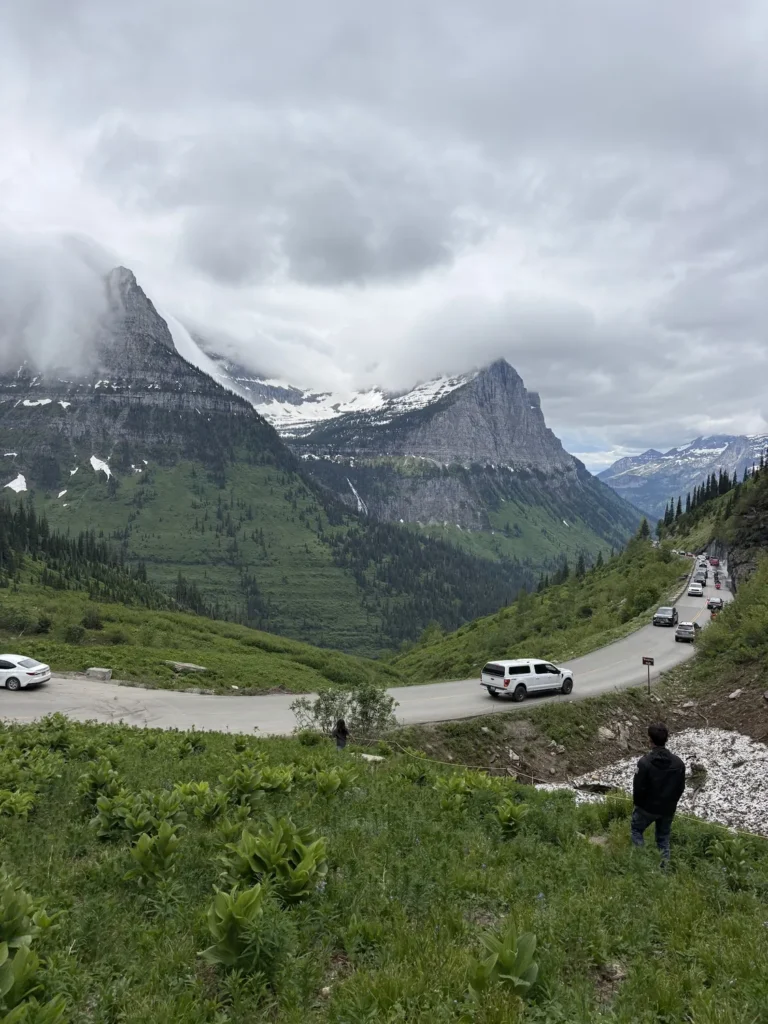
Is Going-to-the-Sun Road scary to drive?
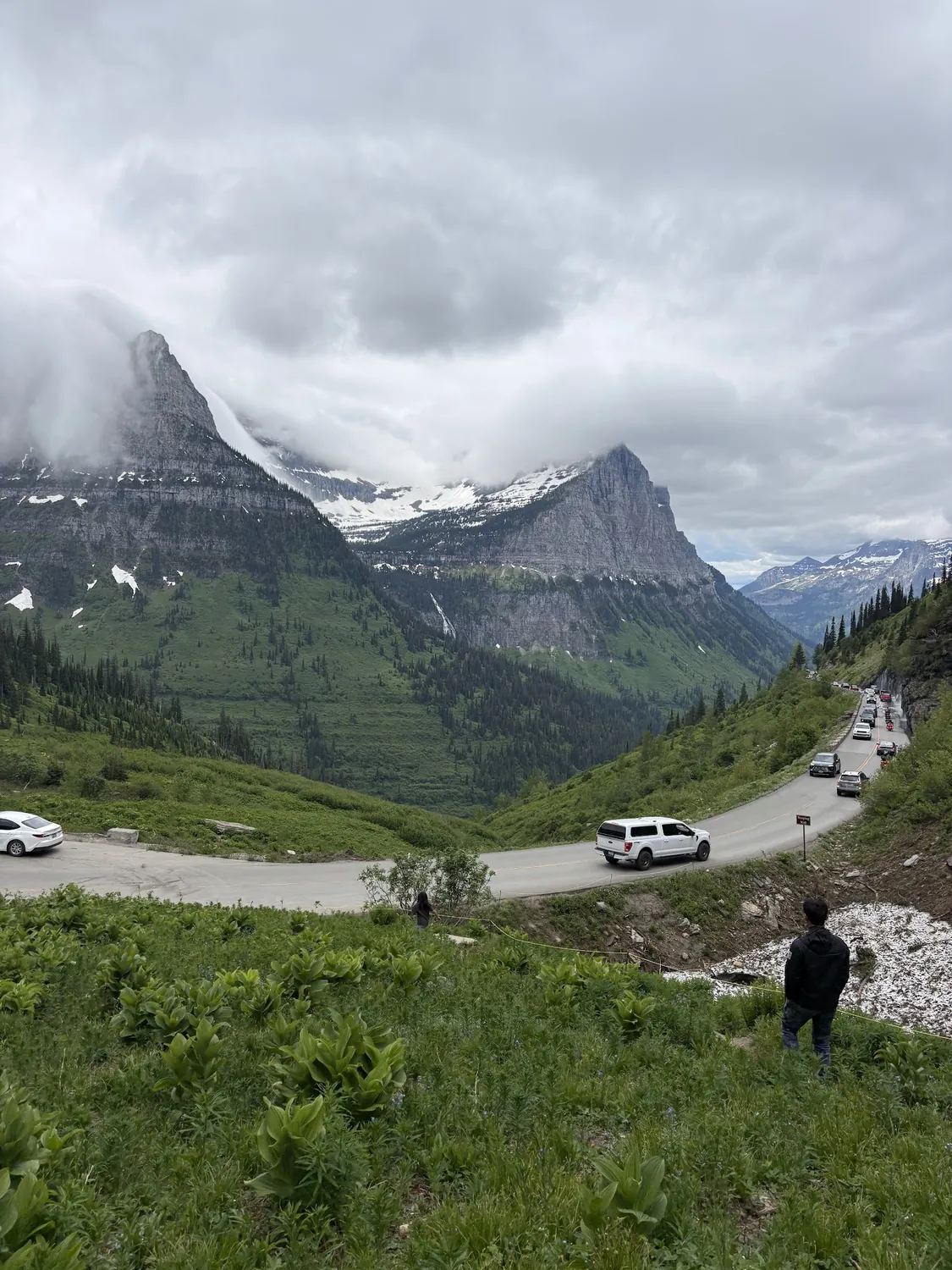
It can be a little scary, especially if it’s your first time. You’re at high elevation, the road is narrow and curvy, and there are big drop-offs. But I don’t think it’s worth skipping. Going-to-the-Sun Road is one of the most beautiful parts of Glacier National Park, and a lot of the best hikes start right off of it.
I think people make this road sound scarier than it actually is. Unless curvy mountain roads really get to you, I wouldn’t worry too much. Go slow, focus on the road, and you’ll be fine.
Why does Going-to-the-Sun Road feel scary?
A few things add up, mostly in the middle section of the road (not the beginning or the end):
- High elevation: The road tops out at Logan Pass at 6,646 feet
- Big drop-offs: On parts of the alpine section, the mountain falls away right next to the road
- A narrow road: The lanes are tight, especially when a bigger vehicle is coming the other way
- Lots of curves: It winds back and forth along the mountainside
- Weather: Clouds, fog and rain can roll in fast up high
Which direction is less scary?
East to west is less scary. Driving from St. Mary toward West Glacier, you’re on the inside lane, closer to the mountain instead of the cliff.
Going west to east (from Lake McDonald up to Logan Pass), you’re on the outside of the road, so you can see the drop-off the whole climb. That’s the direction I went my first time, and it’s definitely the one that feels scarier.
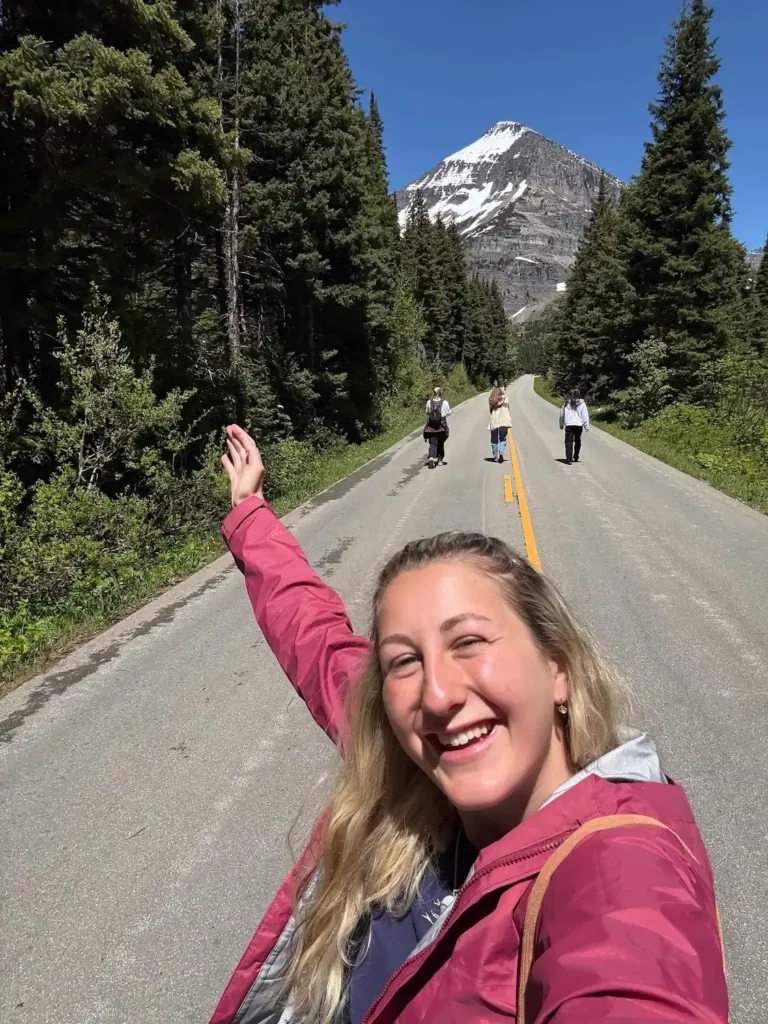
Are there steep drop-offs?
Yes. In the middle section of the road there’s a big drop-off on one side. That’s the part most people mean when they say Going-to-the-Sun Road is scary. The beginning and end of the road, around Lake McDonald and St. Mary Lake, are much more relaxed.
Are there guardrails on Going-to-the-Sun Road?
There are low stone guard walls along much of the steepest part of the road. They aren’t tall, so you’ll still see the drop-off, but there is something between you and the edge on a lot of the stretch that feels the most exposed.
How narrow is Going-to-the-Sun Road?
It’s pretty narrow, especially in the alpine section, which is part of why it feels scary. Just stay inside your lines and be aware of what’s around you.
It’s narrow enough that the park limits vehicle size on the alpine section. Between Avalanche Creek and Rising Sun, vehicles can’t be longer than 21 feet or wider than 8 feet (including mirrors). Taller vehicles, around 10 feet, can also have trouble with the rock overhangs west of Logan Pass. Check the National Park Service’s Going-to-the-Sun Road page for the current rules before you go.
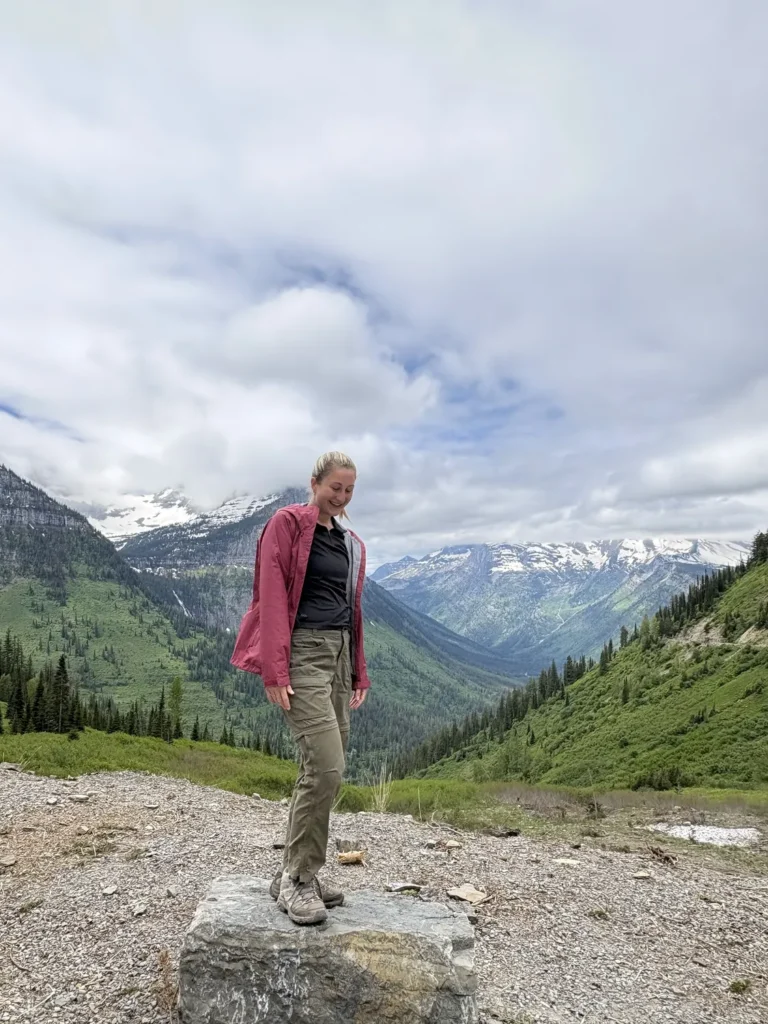
Is it safe for nervous drivers?
I think so, as long as you take it slow. The speed limit is only 25 mph on the alpine section, so nobody is flying around the curves. Drive at a speed you’re comfortable with, use the pullouts to let people pass, and keep your eyes on the road.
I was nervous my first time driving it, and it ended up being completely fine. I just drove slowly, took my time, and paid attention to the road instead of the views.
Can you drive it if you’re afraid of heights?
If you’re afraid of heights, I’d say maybe don’t be the driver. Sit in the passenger seat and enjoy the views, or let someone else take the wheel for the middle section. And if you’d rather not deal with it at all, take the shuttle (more on that below).
Is the east or west side scarier?
The scary part is really the middle of the road, around Logan Pass, not the east or west ends. Which side of the road you’re on matters more: going west to east puts you on the cliff side, and going east to west keeps you next to the mountain.
Don’t drive it at night or in bad weather
The two times I’d actually call the road scary are at night and in bad weather. Usually the road closes when the weather gets really bad, but not always.
The first day the road opened in 2026, I drove it and could barely see 10 feet in front of me because we were literally in the clouds near Logan Pass. If you can, wait for a clear day. You’ll feel better, and you’ll actually see the views.
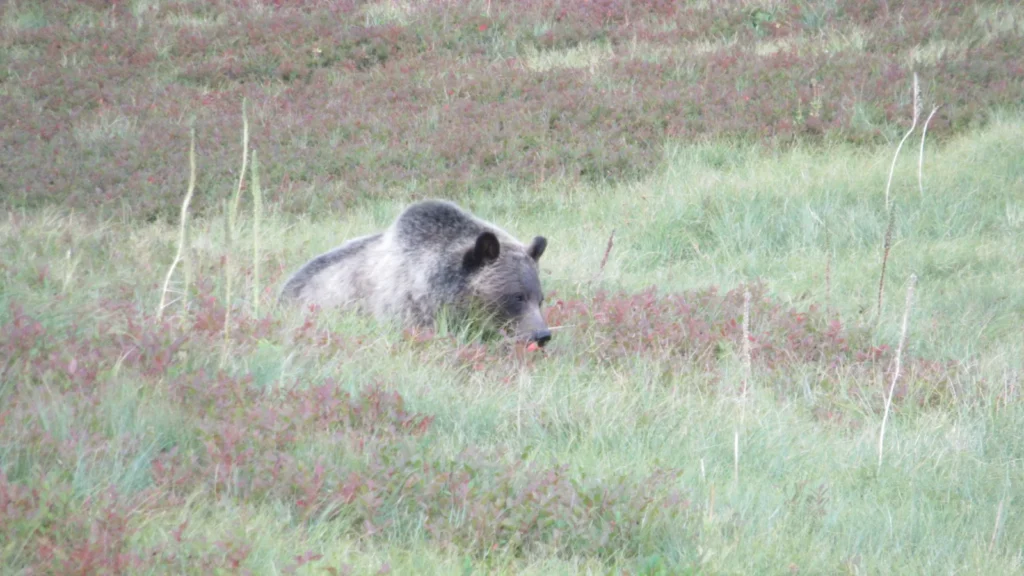
Wildlife is another reason I don’t drive it in the dark. There’s tons of wildlife along Going-to-the-Sun Road, but during the day it’s usually not on the road itself. You’ll mostly see animals on the sides of the road, in the Logan Pass parking lot or at a pullout. At night, though, animals tend to come out onto the road, and they’re a lot harder to see.
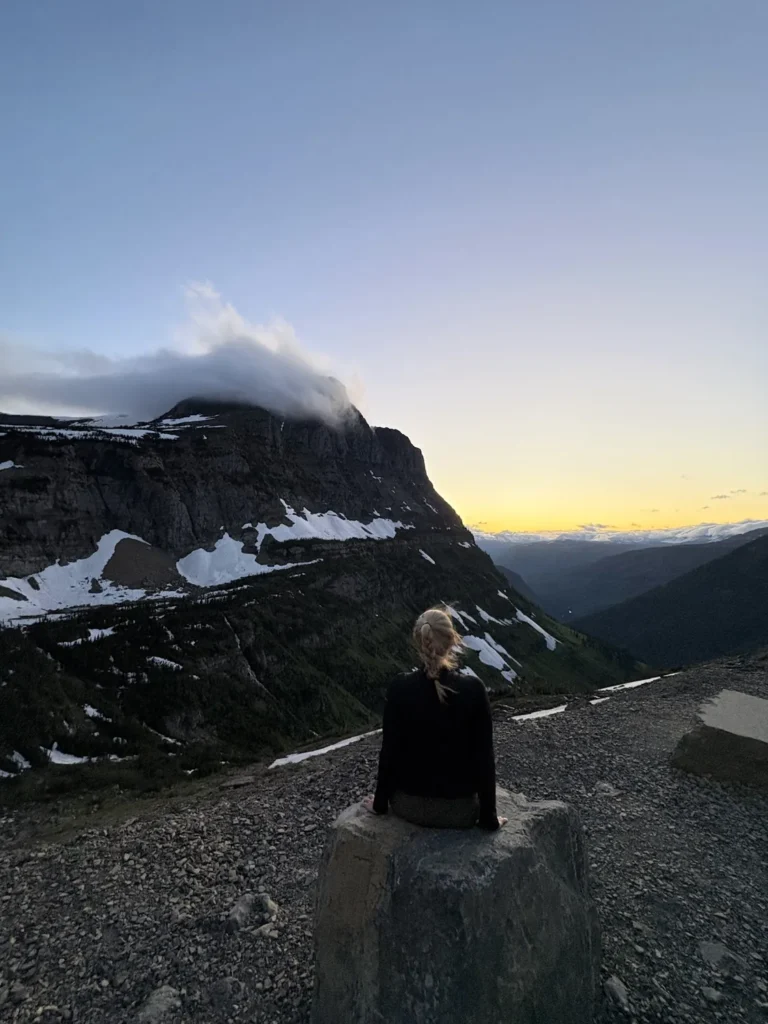
Can you take a shuttle instead of driving?
Yes. During peak season there’s a park shuttle on Going-to-the-Sun Road, and it’s a great option if you don’t want to drive it. Someone else does the driving and you get to enjoy the view.
In 2026, here’s how it worked for me:
- Shuttle tickets were released on Recreation.gov at 7 PM the night before
- A ticket was $1
- It was super easy, and I could look out the window the whole time
These were the 2026 rules, and they may change for 2027 and later. I’ll try to update this post as new information comes out. For more on parking and shuttles at Logan Pass, see my underrated Glacier hikes guide.
My experience driving Going-to-the-Sun Road
My first time over the road, four years ago, I thought it was super scary. I wasn’t in control of the vehicle, we were in a taller car, and we were going west to east on the cliff side.
Now it’s not scary at all. I’ve driven it so many times that it’s just my way into town. It’s still one of the most beautiful drives I’ve ever done, and that part never gets old.
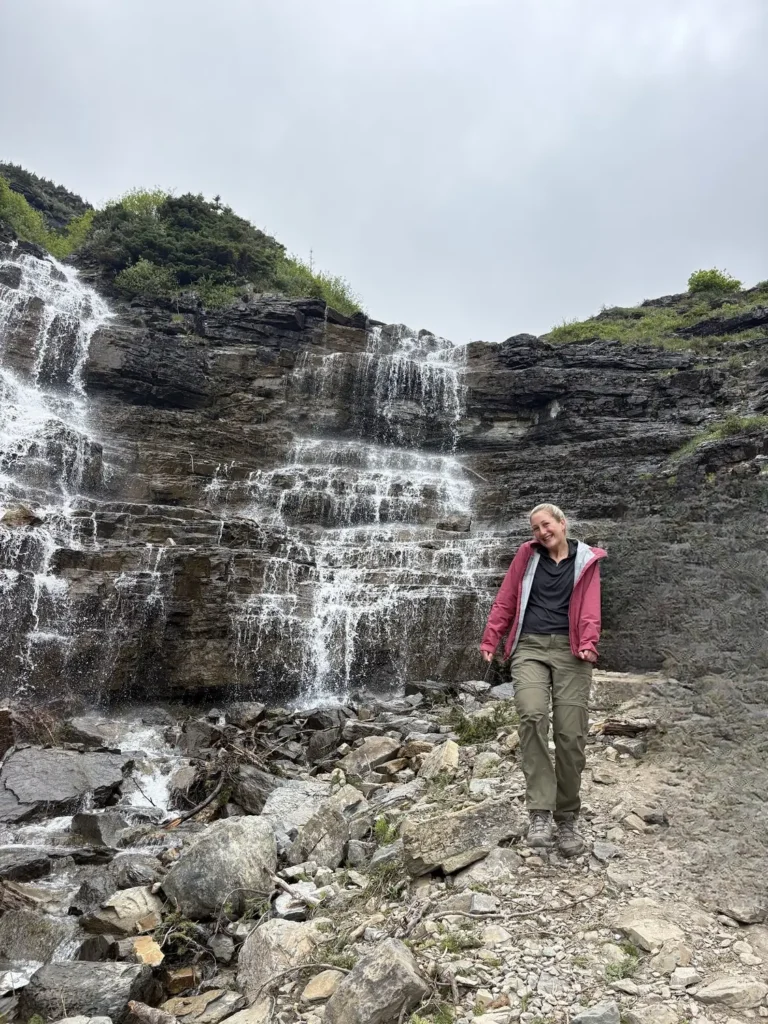
Tips for driving Going-to-the-Sun Road for the first time
- Go slow. Follow the car in front of you and don’t worry about anyone behind you
- Focus on the road. If you’re driving, let your passengers look at the views, then switch off
- Use the pullouts. There are lots of them. Pull over to take a breath, let people pass, or just enjoy the view
- Drive east to west if you’re nervous, so you’re on the mountain side
- Avoid driving at night or in bad weather. If you need to get from one side of the park to the other after dark or in bad weather, you can drive around the park instead. It takes about the same amount of time, so you’re not really losing anything
- Expect no cell service. There’s basically no cellular connection along the whole road, except maybe near St. Mary and Rising Sun on the east side, depending on your cell provider. Download offline maps and let someone know your plans before you go Don’t worry about getting lost, though. It’s one road the whole way, so it’s really hard to take a wrong turn. If you have a question, you can always ask other visitors or park employees, and there’s a visitor center at Logan Pass, the highest point on the road, about 45 minutes from either end
- Check the road status before you go. The alpine section usually opens in late June or early July, depending on snow
Getting around: There’s no real public transportation around Glacier, and the park shuttle only runs along Going-to-the-Sun Road in summer, so having a car is really the only way to get around. 🚗 Book your rental car here
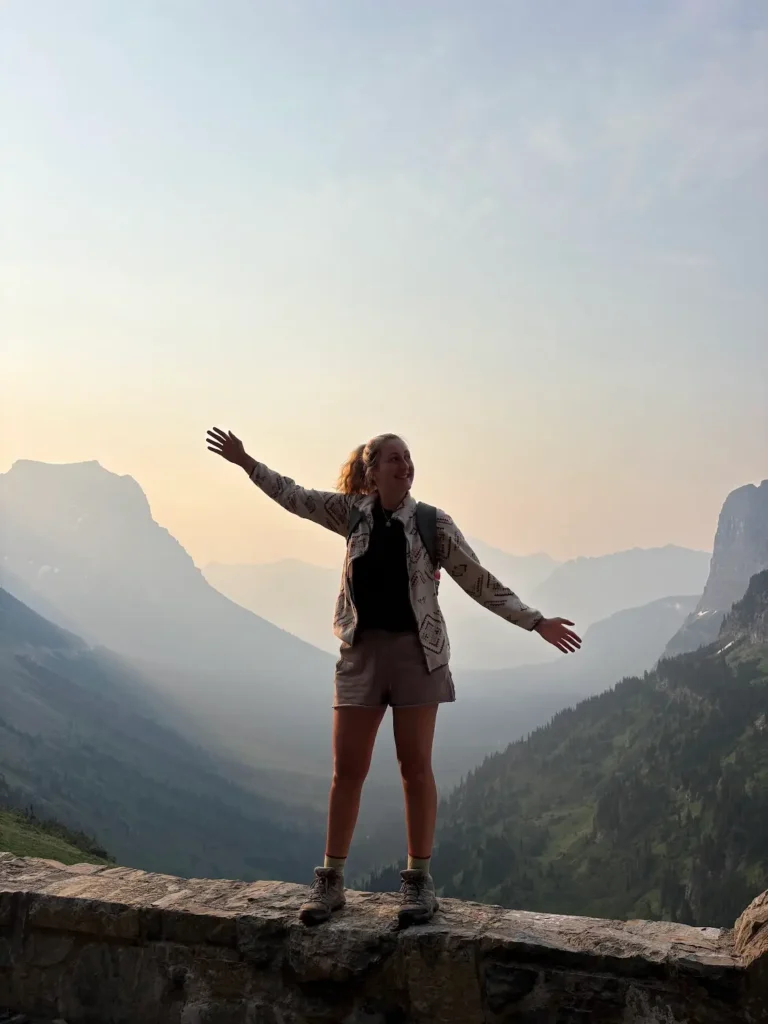
Is it worth driving Going-to-the-Sun Road?
100% yes. It’s worth getting over the fear, because it really isn’t that bad, and it’s one of the highlights of Glacier. Some of my favorite hikes start right off the road, like Hidden Lake and the Highline Trail.
Planning your trip? My 2-day, 3-day, 5-day and 7-day Glacier itineraries all include Going-to-the-Sun Road, and my guide to where to stay in Glacier compares the east and west sides.
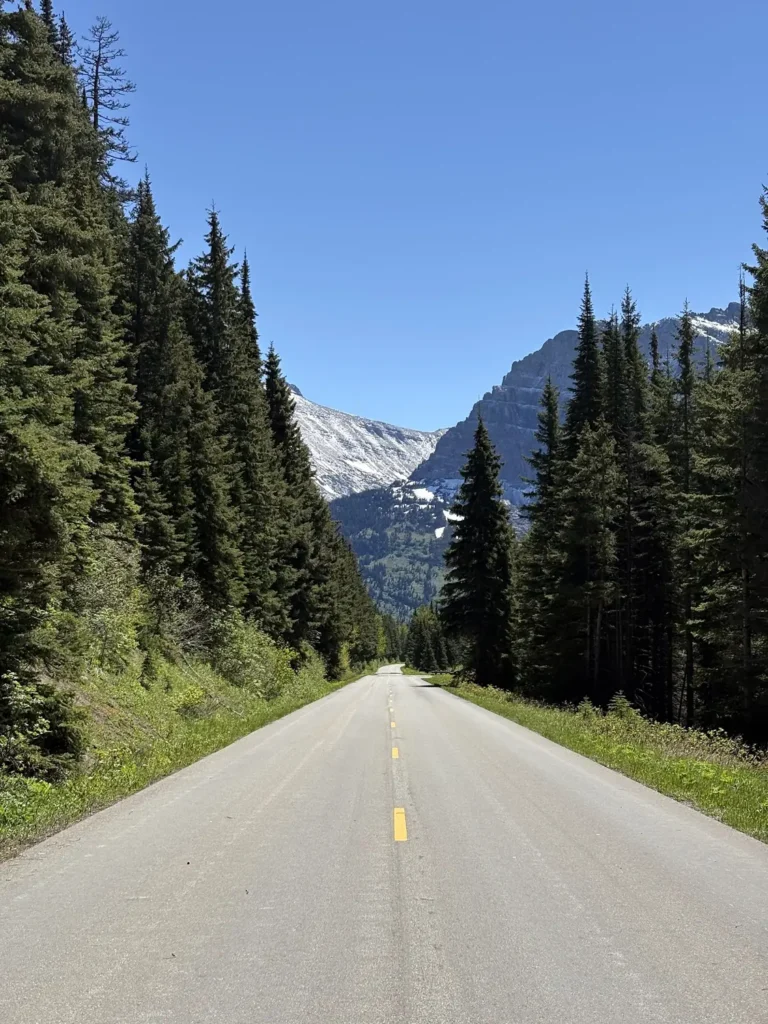
Going-to-the-Sun Road FAQ
Is Going-to-the-Sun Road scary?
It can feel scary the first time, mostly on the middle (alpine) section near Logan Pass, where the road is narrow with big drop-offs. The speed limit is 25 mph there and there are stone guard walls, so most people find it’s not as bad as they expected.
Which direction is less scary on Going-to-the-Sun Road?
East to west. Driving from St. Mary toward West Glacier keeps you on the inside lane next to the mountain, instead of the cliff side.
What is the speed limit on Going-to-the-Sun Road?
25 mph on the alpine section and 40 mph on the lower sections, according to the National Park Service.
How long does it take to drive Going-to-the-Sun Road?
The road is about 50 miles long and takes about 1.5 to 2 hours without stopping. Plan for much longer, because you’ll want to stop at pullouts and overlooks.
Can I take a shuttle on Going-to-the-Sun Road?
Yes, during peak season. In 2026, shuttle tickets were released on Recreation.gov at 7 PM the night before and cost $1. Check the current rules before your trip.
Is there cell service on Going-to-the-Sun Road?
Not really. There’s no cellular connection on most of the road, except maybe near St. Mary and Rising Sun, depending on your cell provider. Download offline maps before you start the drive. Don’t worry about getting lost, though. It’s one road the whole way, so it’s really hard to take a wrong turn. If you have a question, you can always ask other visitors or park employees, and there’s a visitor center at Logan Pass, the highest point on the road, about 45 minutes from either end.
Is Going-to-the-Sun Road dangerous at night?
I don’t recommend driving it at night or in bad weather. The views are the whole point, the drop-offs feel a lot scarier when you can’t see well, and animals tend to come out onto the road at night.