Affiliate disclosure: Some of the links in this post are affiliate links, which means I may earn a small commission if you buy through them, at no extra cost to you. As an Amazon Associate, I earn from qualifying purchases. Read my full disclosure.
“We trynna save money, so no hotels.” That one line from my car camping video somehow reached hundreds of thousands of people, and the comments were full of the same questions: what do you sleep on, where do you park, and is it actually safe?
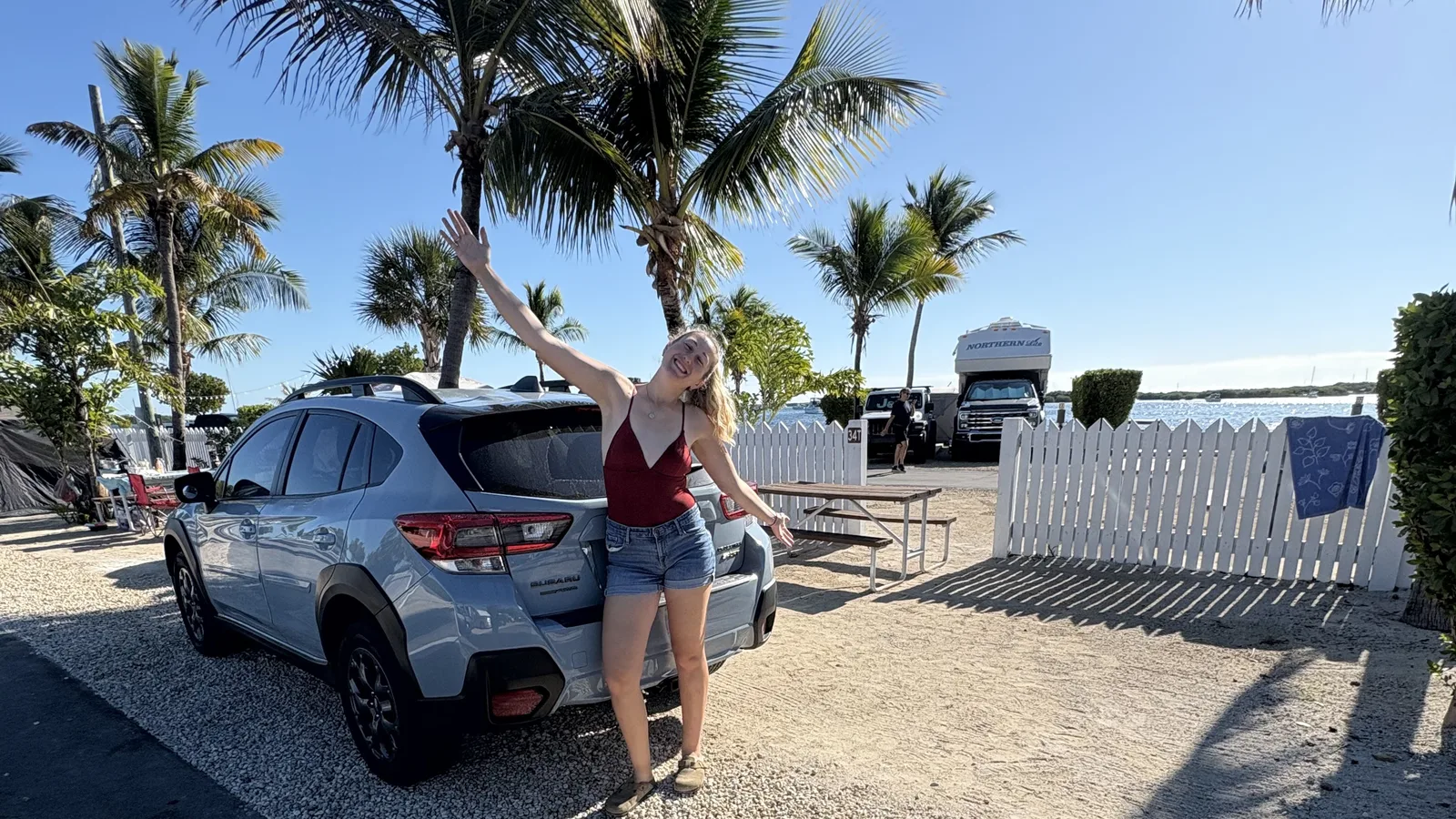
Quick background: I work seasonal jobs in national parks, and I road-trip between them. Hotels and Airbnbs add up fast on a long drive, so I started sleeping in my car. It saves me a ton of money, and I love the freedom of stopping wherever the day takes me.
Here’s my exact car camping setup, the car camping essentials I actually use, where I sleep as a solo woman, and what it really costs.
Quick answers
- My car: a Subaru Crosstrek with the back seats folded down.
- What I sleep on: a Luno air mattress made for cars.
- Where I sleep: mostly Cracker Barrel parking lots, where other car campers usually are.
- What it costs: about $0 a night now. I used to pay around $50 a night at KOAs.
- Showers: pools and similar spots I find on iOverlander, usually $5 to $8.
- Safety: my location is shared, I trust my gut, and a hotel is always my backup.
My Car Camping Gear at a Glance
Short on time? Here’s everything I use, all in one place. I explain each one below.
- Bed: Luno air mattress
- Pillow: Sea to Summit Aeros pillow
- Blanket: Sherpa camping blanket
- Privacy: magnetic window shades
- Power: portable charger
- Light: Black Diamond headlamp
- Stove: Coleman camping stove
- Utensils: travel utensils
- Cooler: RTIC cooler
- Water: Stanley bottle
- Towel: quick-dry towel
- Staying warm: my Cotopaxi Fuego puffer and wool socks from Smartwool or Darn Tough
My Car Camping Setup (Subaru Crosstrek)
I drive a Subaru Crosstrek, and it’s honestly a great car camping car. Here’s how I set it up every night:
- Fold the back seats down.
- Slide the passenger seat forward a bit to make more room.
- Lay out my Luno air mattress and blow it up.
- Put a sheet over it, then add my pillow and blankets.
- Once I’m parked for the night, put up my magnetic window shades.
Can You Fit in a Subaru Crosstrek?
I’m 5’10”, and I’ll be honest, it’s kinda hard to stretch out. My legs are usually a little curled, but that’s how I sleep anyway. I’m probably just an inch or two too tall for my car. If you’re slightly shorter, you could probably stretch out comfortably.
Here’s what my setup looks like:
Car Camping Essentials Checklist (My Packing List)
These are my car camping must-haves, and everything I actually keep in my car. Nothing fancy, just the stuff that works.
Sleep
My Luno mattress was over $300, but it’s so worth it. It’s really comfortable, and they have a good warranty. My favorite part is that it unzips down the middle, so I can blow up just one side and keep all my stuff on the other. If a friend comes along, I blow up both sides.
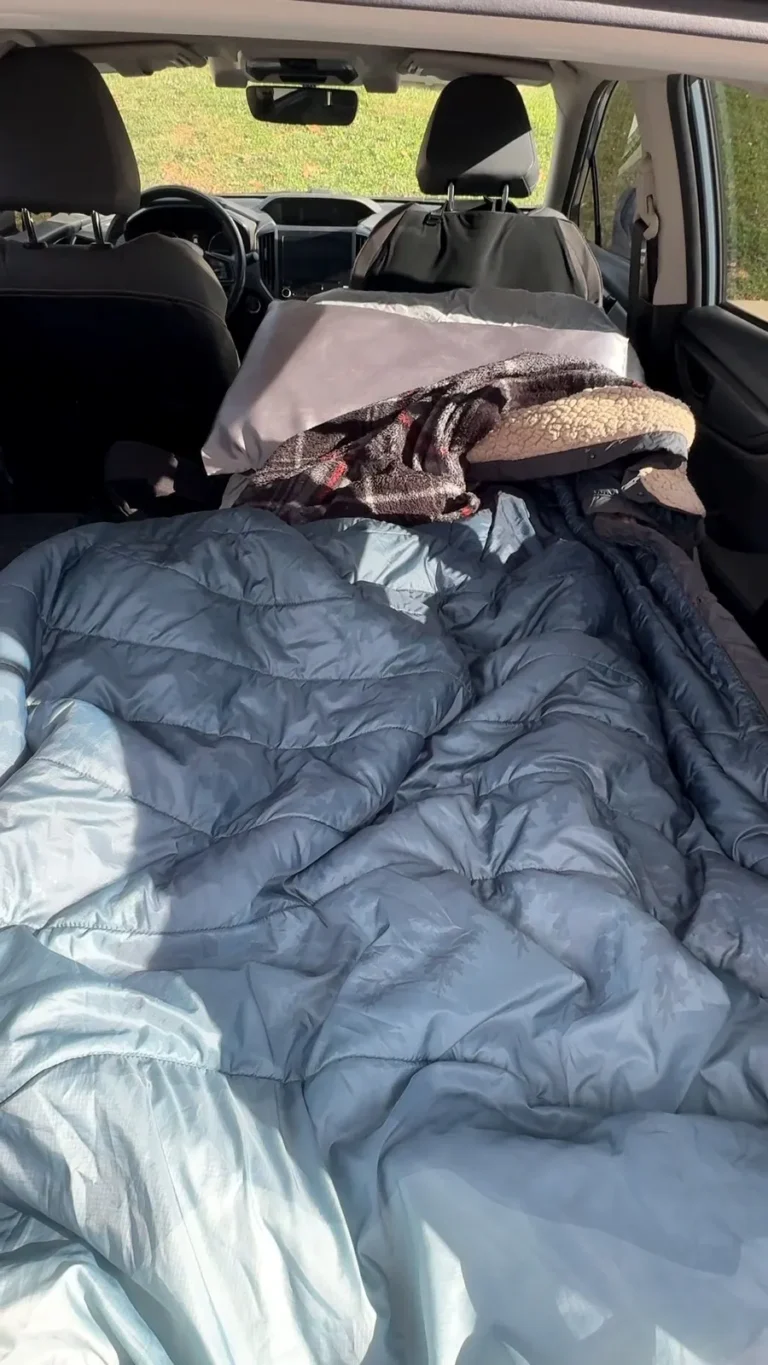
On top of that, I use a regular sheet, a Sea to Summit Aeros pillow, and a Sherpa camping blanket.
Here’s me setting up my car for the night:
Privacy and Airflow
The magnetic window shades are a must for me. They give me privacy, and I don’t feel like someone can watch me while I sleep. For air, I crack my sunroof open just slightly.
Light and Power
I always have my portable charger on deck, and my Black Diamond headlamp is usually right next to me.
Kitchen
- A Coleman camping stove
- A classic stainless steel pan
- Travel utensils, including something to cook with on the pan
- My RTIC cooler
- A Stanley bottle full of clean water, just in case
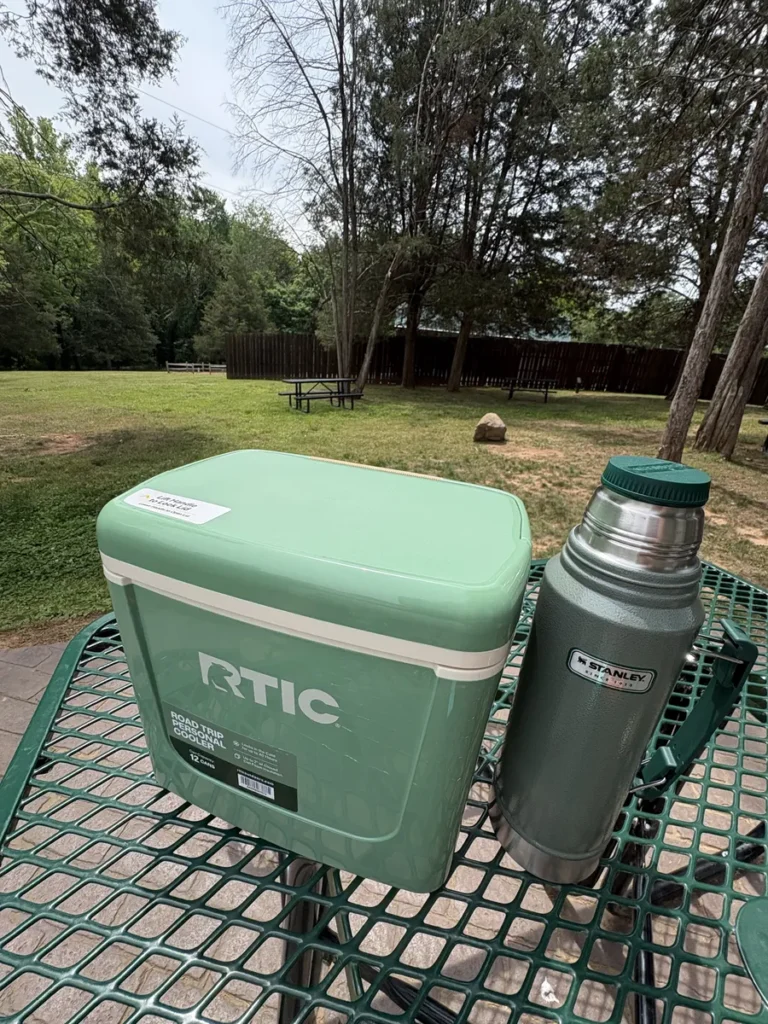
For food, it depends on the trip. On a longer road trip, I grab simple groceries for the cooler: lunch meat, bagels, cream cheese, and snack packs. If it’s only a day or two, I usually just stop for quick meals at places like Taco Bell, Chipotle, or Chick-fil-A.
Hygiene
I keep a quick-dry towel and baby wipes on deck at all times. Wipes are great for my face and for staying fresh between showers. More on how I find showers in the FAQ below.
Safety
I always have a first aid kit, and I keep pepper spray within reach. It’s good to have something to protect yourself, just check the pepper spray rules in each state you drive through. The shades help me feel less exposed. I always lock my car, so the alarm would go off if someone tried to break in, and I keep my keys next to me so I can set off the alarm myself if anything happens.
Organization
I’ll be honest, my car is kinda chaos. But I keep it manageable with a few bags: one for all my food, one for clean clothes, and one for dirty clothes.
Where I Sleep When I Car Camp
When I first started, I used the app iOverlander to find free spots, and I still use it sometimes. But a lot of times I’d pull up and be the only one there, and that made me feel unsafe.
I also didn’t want to pay to sleep in my car. KOAs charged me around $50 a night, which I think is crazy when I’m bringing my own bed. So now I mostly go to Cracker Barrel.
Cracker Barrel
There’s usually a good amount of other car campers at Cracker Barrel. You can tell who they are, because they’re either in an RV or parked in a random spot, sometimes with shades up. Seeing other people there makes me feel a lot better.
Overnight parking is up to each location’s manager, though, so call ahead or check the signs in the lot. Some cities also ban sleeping in your car, so look up the local rules too. My tips:
- Go inside and eat. They’re letting you sleep there, so it’s nice to support them.
- Park near other campers. I feel a lot safer when I’m not alone, and I especially love seeing an older couple in an RV or someone my age car camping too.
- Leave early in the morning.
Campgrounds
Campgrounds like KOA are the easy, comfortable option, with bathrooms and showers, but you pay for it. Some smaller campgrounds are pretty cheap, so they’re worth looking into if you want a real site.
Free Spots on iOverlander
iOverlander is great for finding free places to park and for finding showers. Just know that if you pull up and you’re alone and it doesn’t feel right, leave.
The Dyrt
I haven’t used The Dyrt myself yet, but I’ve heard good things. It shows campgrounds, both paid and free, including free dispersed camping, no-fee campgrounds, and free overnight parking spots. The full free camping maps come with The Dyrt PRO, which is $59.99 a year after a free trial.
Staying Safe as a Solo Woman
- Share your location. Mine is shared with a lot of people, including my family and all of my close friends.
- Trust your gut. I will not stay somewhere that feels unsafe. If a spot feels off, I leave.
- Look for other campers. I like having other people around who seem like safe people.
- Have a backup plan. If I really can’t find anywhere to sleep, I check into a hotel. I won’t take a chance.
The night I picked a hotel instead
Here’s a real example. I was driving from Florida up to Georgia, and I planned to car camp at a Cracker Barrel in Georgia. What I didn’t realize was that there were huge storms on the way up. As soon as I saw the bad weather in front of me, I got off the highway. I wasn’t going to keep driving into a storm.
I found a Cracker Barrel nearby, but I was still in Florida, and that location didn’t allow overnight parking. Florida is a lot stricter about sleeping in your car than other places I’ve been, so I wasn’t going to risk it.
So I got a hotel for the night instead. It was about $80, but I’d rather be safe than drive through a storm. I also didn’t want to get towed or ticketed, and I want to respect the local rules wherever I stop. That’s exactly what the backup plan is for.
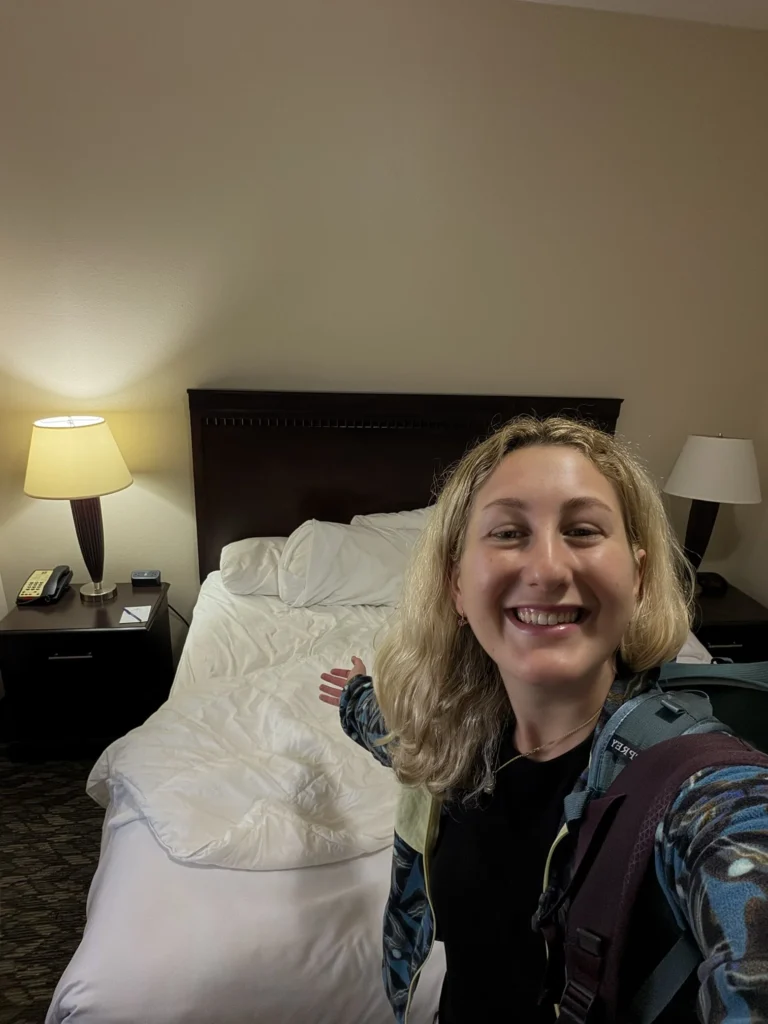
Way better than driving into a storm.
What Car Camping Actually Costs Me
When I started car camping, I stayed at KOAs, which worked out to about $50 a night. Now I stay in free spots, mostly Cracker Barrel, so I spend $0 a night on camping.
Once you’ve paid for your setup, you’re really just paying for food and gas:
- Camping: $0 a night
- Groceries: about $25 for a couple of days
- Gas: about $50 for every 500 miles
Here’s the breakdown from one of my road trips:
What I’d Skip (or I’m Still Deciding On)
I bought a bunch of string lights to hang inside my car, and honestly, I’m still not sure I want to use them. They’d make it feel more homey, but I feel like they bring attention to my car, and I don’t love that when I’m alone. Other than that, there’s nothing on this list I regret.
Car Camping FAQ
Is car camping legal?
Yes, in a lot of places, but the rules change by city and by business. Always check the signs, ask if you’re not sure, and look up local rules on sleeping in your car.
Can you sleep in your car in Florida?
There’s no statewide law against it, but Florida is stricter than a lot of states. Rest areas and welcome centers only let you stay up to three hours, sleeping on public property like parks and sidewalks isn’t allowed, and a lot of cities and businesses don’t allow overnight parking. Always check the signs, and if you’re not sure, find somewhere else for the night.
Is car camping safe?
I’d say it’s pretty safe, but some areas just aren’t good places to stay. Trust your gut instincts, and make sure the spot feels right for you.
Can you sleep in your car at Cracker Barrel?
Often, yes, but it’s up to each location’s manager. Check the signs in the lot or call ahead. I park near other campers, go inside to eat, and leave early.
Where do you go to the bathroom at night?
At Cracker Barrel, I look up what time they close and do my bedtime routine about 30 minutes before, so I’m not bothering them right at closing. I use their bathroom then.
I try not to drink too much water before bed. If I do end up needing the bathroom at night, I look up something nearby that’s open, like a 24/7 gas station, store, or fast food place, and head over real quick.
When I’m pulling in or out of the lot late at night, I turn my headlights off for a few seconds so I don’t shine them on other campers. Just make sure you turn them back on!
How do you shower when you car camp?
Sometimes I go two to three days without showering if I’m not too sweaty. You can shower at truck stops or gas stations, but I don’t feel safe going into those, so I search “shower” on iOverlander in the area I’m in. I usually find a pool or similar spot with showers for $5 to $8, which isn’t too bad. I always bring my own towel.
Another option is a gym membership with locations all over the country. For example, the Planet Fitness Black Card lets you use any Planet Fitness, and it starts at $24.99 a month plus a $49 annual fee (prices vary by location). That could be really convenient on a long trip.
How do you stay warm or cool?
If it’s really hot, I skip the blankets and just sleep with a sheet, and I crack my sunroof slightly for fresh air.
If it’s really cold, I have about four blankets in my car, and I usually have my Cotopaxi Fuego puffer with me too, which keeps me nice and warm. My feet are always the first to get cold, so I put on thick socks, like my Smartwool or Darn Tough socks. I also keep HotHands warmers in the car, but it’s never gotten cold enough to need them.
Where do you charge your phone?
My phone is usually fully charged after driving all day, but I keep a portable charger next to me at night just in case.