Affiliate disclosure: Some of the links in this post are affiliate links, which means I may earn a small commission if you buy through them, at no extra cost to you. As an Amazon Associate, I earn from qualifying purchases. Read my full disclosure.
Backcountry camping in Glacier National Park was one of the best things I did while I lived and worked in Glacier. I spent four nights in Glacier’s backcountry on two different backpacking trips: Belly River to Goat Haunt, which was my very first backpacking trip, and Bowman Lake to Kintla Lake in early October.
In this guide, I’ll cover everything I wish I’d known before my first night out there: how the backcountry permit works, the campgrounds I’ve stayed at (and which one I’d skip), when to go, how cold it gets, what to pack, and how to store your food in bear country.
Looking for drive-in campgrounds instead? This guide is all about backcountry camping. For Glacier’s 13 front-country campgrounds, like Apgar, check out the official NPS camping page.
Glacier backcountry camping: quick answers
- Do you need a permit? Yes. You need a wilderness (backcountry) permit to camp overnight in Glacier’s backcountry.
- How to get one: Reserve ahead on Recreation.gov, or get a walk-up permit at a permit office the day before or the day of your trip.
- Cost: From May 1 to October 31, it’s a $10 permit fee plus $7 per person per night, according to the NPS.
- Best time to go: September and early October, if you want fewer people and easier permits.
- Nights are cold: All four of my nights were in the 30s, and possibly below freezing.
- My favorite campground: Head Kintla Lake
Permit rules and fees are from the National Park Service as of November 2026. Always double-check the NPS backcountry reservations page before you go, because they can change.
How to get a Glacier backcountry permit
Honestly, getting a permit seems a lot harder online than it actually is. There are two ways to do it.
Option 1: Reserve ahead on Recreation.gov
According to the NPS, Glacier runs early access lotteries on Recreation.gov, and then the rest of the advance sites open up first-come, first-served. If you’re going during peak summer season, I’d book ahead if you can.
Option 2: Get a walk-up permit (what I did)
The NPS says about 30% of the backcountry sites in the park are set aside for walk-ups, and you can get a walk-up permit the day before or the day of your trip. For my first trip, I didn’t actually have to do anything. My friend was a ranger who worked with permits, so he took care of everything. For my second trip, I went to the visitor center the day before, right when it opened, and got our permits there.
It was so easy. The rangers walk you through everything: which campsites are open, the current trail conditions, and any warnings like bear activity along your route. You’ll also need to watch the NPS wilderness safety videos, and you can watch them ahead of time to speed things up. During peak season, go to the permit office as early as you can the day before, so there’s a better chance your campsites are still available.
According to the NPS, you can get a walk-up permit at any open permit office, including the Apgar Wilderness Permit Center, the Many Glacier Ranger Station, the Polebridge Ranger Station, and the St. Mary Visitor Center.
The backcountry campgrounds I stayed at
One thing I noticed is that a lot of Glacier’s backcountry campgrounds are right next to a lake, since it’s a perfect water source. Here’s my honest take on each one.
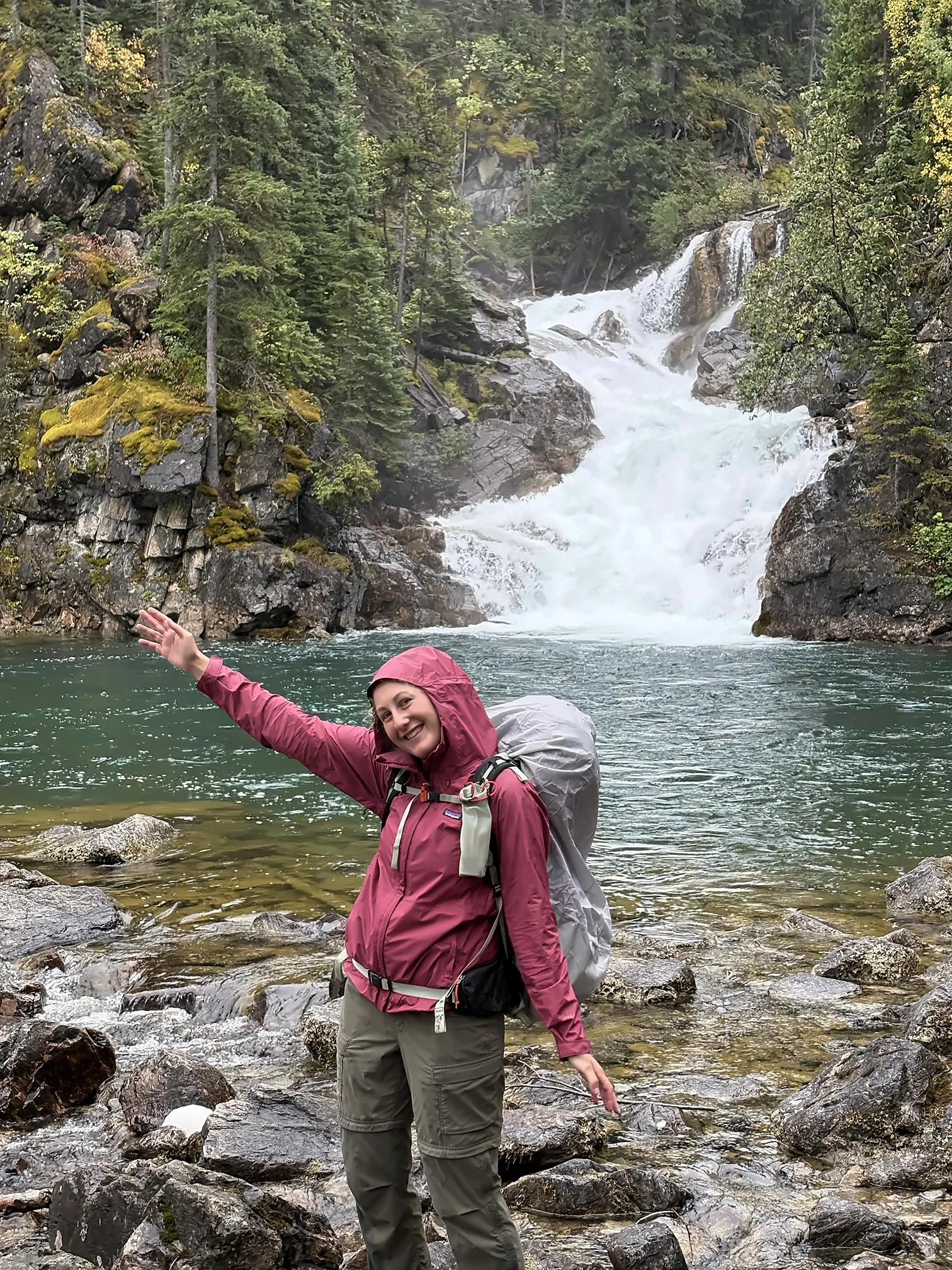
Glenns Lake Head Campground (Belly River trip)
This was my first night ever backpacking. It was a beautiful waterfront campground, with the lake right in front of you. The views were incredible, even after a rainy first day on the trail.
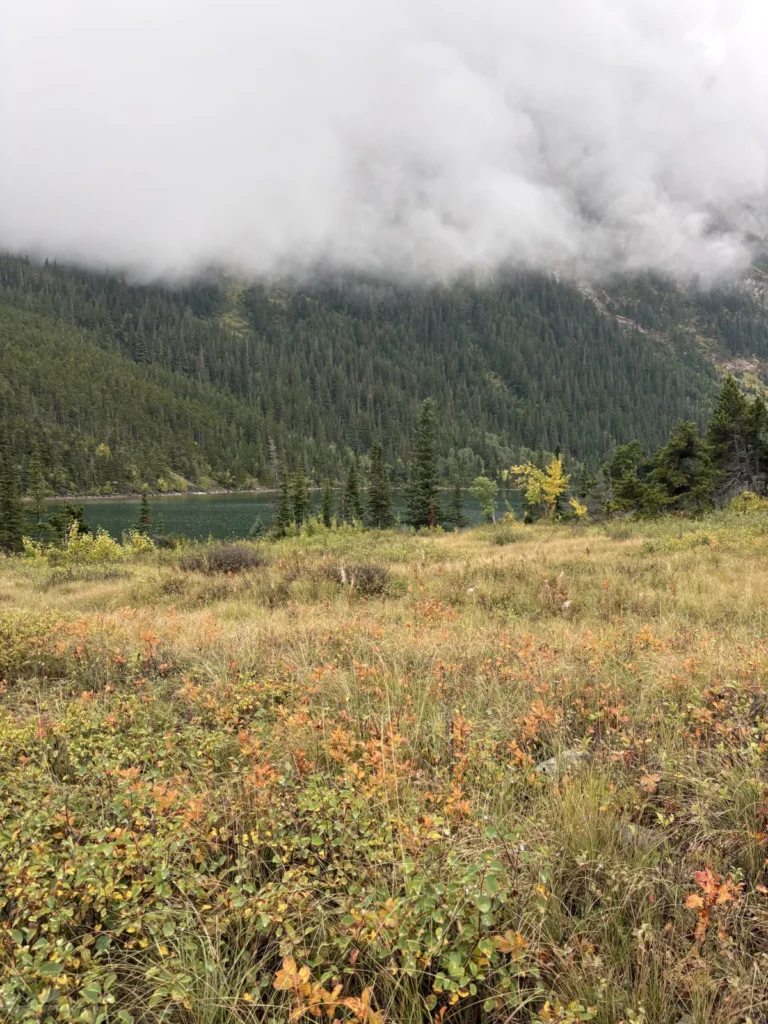
Kootenai Lake Campground (Belly River trip)
Another stunning waterfront campground. The lake is basically right there, and we got the most beautiful alpenglow on the mountains at sunrise.
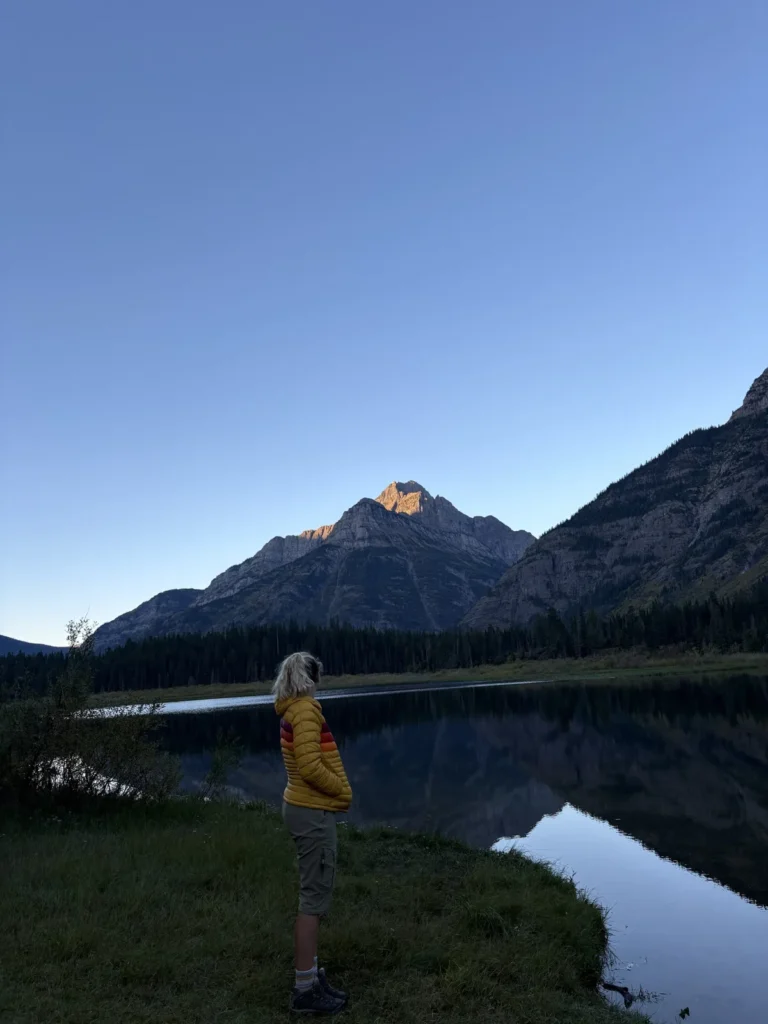
Brown Pass Campground (Bowman to Kintla trip)
Brown Pass was okay, but I wouldn’t stay there again. The usual water source was dried up when we went, so we had to walk a little to get water. The bathroom was in a weird spot, out in the open but with no view. There were also postings about bear activity, and we were the only ones there, probably because it was so late in the season.
It was just convenient for our itinerary. If I did that trip again, I’d stay at Hole in the Wall or Boulder Pass instead. I break down the itinerary I’d do next time in my Bowman Lake to Kintla Lake guide.
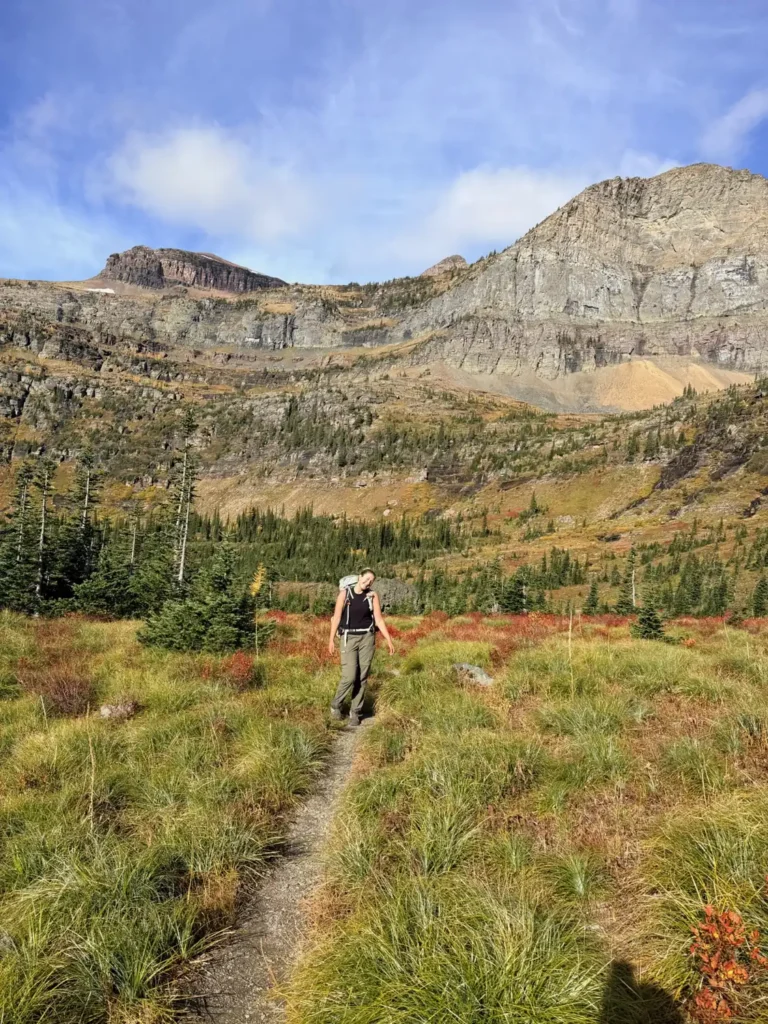
Head Kintla Lake Campground (my favorite)
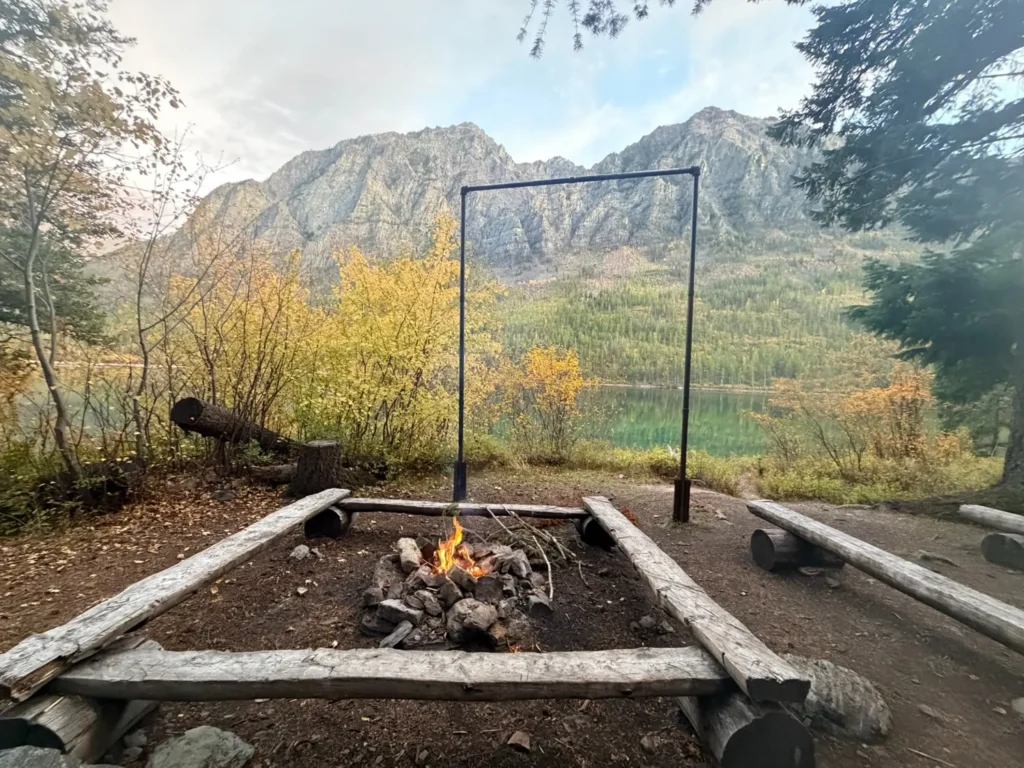
Head Kintla Lake is my favorite backcountry campground in Glacier so far. I sound like a broken record, but the views there were just absolutely stunning. It was also the only campground I stayed at where we were allowed to have a fire, and there were plenty of good sticks around to use for it. Ending a long hiking day with a fire by the lake was so nice.
Best time to go backcountry camping in Glacier
If you want to get away from the crowds and not have trouble getting campsites, I think September and early October are the best times to go. Just be aware of the weather.
I did my Bowman to Kintla trip at the beginning of October, and barely anyone was out backpacking. None of the campsites were full, and we hardly saw any people. In 2026, the weather didn’t start turning until the end of September, and even then, the snow would melt and it would be fine again. When we went in October, it was perfect weather: not too hot and not too cold. We also got golden larches and fall colors, which made it even better.

During peak summer season, the campsites fill up much faster, so book ahead or get to the permit office as early as possible the day before. For more on timing, see my guide to the best time to visit Glacier.
East side or west side?
All of Glacier is beautiful, but if you want the most dramatic scenery Glacier has to offer, I’d highly recommend the east side. That said, the Polebridge area up in the North Fork, where the Bowman to Kintla trip starts, is beautiful too, and that’s where my favorite campground is. You really can’t go wrong.
Bathrooms, water, and campfires
- Bathrooms: I was honestly surprised by how clean all the bathrooms were at the campgrounds I stayed at. They’re pit toilets, so don’t expect anything fancy, and make sure you bring your own toilet paper, because they usually don’t have any.
- Showers: None of the backcountry campgrounds had showers.
- Water: Water was always close by, usually a lake and sometimes a stream. Bring a water filter, since you’ll need to treat it before you drink it. This is the filter I love to use.
- Campfires: Fires aren’t allowed at most backcountry campgrounds. Head Kintla Lake was the only one I stayed at where we could have one. Always check the current fire rules when you get your permit.
Food storage and bears
According to the NPS, at Glacier’s designated backcountry campgrounds, your food, garbage, and cooking gear have to be secured at all times, using the food hanging device provided at each campground or an approved bear-resistant container. In my experience, most campsites have a food hanging pole like the one in the photo above.
Here’s what I do. It’s not just your food that needs to be stored. Anything scented does too, like deodorant, baby wipes, and hand sanitizer, because bears can smell those as well. I put all of it in a waterproof dry sack, so it stays dry if it rains or snows, and I use a lightweight bear hang rope to hang it. To get the rope over, you usually tie a rock or something heavy to the end and throw it. Watch a few videos on how to do a bear hang before you go, but honestly, it’s pretty easy.
And carry bear spray where you can reach it. Glacier has a lot of bears, especially grizzlies. I’ve lived in bear country since my first seasonal job in Yellowstone in 2021, and I still didn’t fully understand how to use bear spray until I got to Glacier. Once I saw how many bears there were, I watched videos and really learned, because I didn’t want to be scared to hike. Read my guide: Do you need bear spray in Glacier?
How cold it gets and what to pack
All four of my nights camping in Glacier were cold, definitely in the 30s and possibly even below freezing. My friends got pretty cold on my first backpacking trip, but I stayed warm for the most part. My toes were a little cold, so next time I’d wear thicker socks and put hand and foot warmers in them.
Layers
Bring layers, preferably merino wool if you can. A puffer is a must. I’ve had my Cotopaxi puffer for three years, and I love it. It’s so warm.
Bring a rain jacket too, in case the weather changes. This is the one I love, and the rain never gets through. If it’s raining and cold, I’ll usually wear my puffer with my rain jacket on top, so I stay warm and dry.
Sleeping bag, pad, and tent
When I got into backpacking, I went to REI, and the employee there went through every detail with me, explaining all the pros and cons of each tent, sleeping bag, and sleeping pad. They even had me lie down on the pads and sleeping bags in the store and choose what felt best. What I ended up with is honestly some of the best gear out there. The price is a lot, but I think it’s worth it, and I’ll be using it for a long time.
- Sleeping bag: My NEMO Disco 15 is rated to 15°F, which is a big reason I stayed warm. Get a well-rated sleeping bag.
- Sleeping pad: Don’t go cheap on your pad, either. I used to sleep right on the ground when I went camping as a kid, but when it’s cold, a well-rated pad makes a huge difference. My NEMO Tensor is super comfortable, especially since I’m a side sleeper. I got the wide version because I twist and turn a lot, and the regular felt like it wasn’t enough space.
- Tent: I use the NEMO Hornet 2-person tent.
- Pack: I just got a new Osprey 40L pack, and it’s super comfy.
You can see everything I bring in my hiking and backpacking gear list.
My favorite backcountry meal
I was really surprised by how much I liked the chicken coconut curry backpacking meal. I only got it because it was on sale, and I was scared it would be spicy, but it hit so hard that I went back and bought more. It also has pretty clean ingredients, which surprised me. You’ll need a small backpacking stove, a pot, and fuel to boil water for it.
Mistakes I saw first-timers make
Not knowing how to use bear spray. A lot of people buy or rent bear spray but have no idea how to use it. With how many bears there are in Glacier, it’s something you really want to know before you go.
Not being ready for the weather to change. Glacier is in the mountains, so the weather can change a lot, and with flights booked so far in advance, you never know what you’ll get. You have to go with the flow. Yes, it can be a bummer when the weather isn’t what you expected, but if you let it affect you too much, you might end up doing nothing. Have a backup plan. Here’s what I’d do on a rainy or smoky day in Glacier.
My Glacier backcountry camping checklist
- Your wilderness permit
- Bear spray, and know how to use it
- A tent, a warm sleeping bag, and a good sleeping pad
- Warm layers, a puffer, and thick socks
- Hand and foot warmers for cold nights
- A dry sack and bear hang rope for your food and anything scented
- A water filter
- A stove, pot, fuel, and backpacking meals
- Toilet paper, since the backcountry toilets usually don’t have any
- A headlamp
- A rain jacket and a rain cover for your pack
Glacier Backcountry Camping FAQ
Do you need a permit to camp in Glacier’s backcountry?
Yes. You need a wilderness permit to camp overnight in Glacier’s backcountry. You can reserve one ahead on Recreation.gov or get a walk-up permit at a permit office the day before or the day of your trip.
How much does a Glacier backcountry permit cost?
According to the NPS, from May 1 to October 31, it’s a $10 permit fee plus $7 per person per night. Winter wilderness permits, from November 1 to April 30, are free.
Can you get a walk-up backcountry permit in Glacier?
Yes. The NPS sets aside about 30% of backcountry sites for walk-ups, and you can get one the day before or the day of your trip at any open permit office. Get there early for the best chance at the campsites you want.
Can you have a campfire in Glacier’s backcountry?
Only at some campgrounds. Head Kintla Lake was the only backcountry campground I stayed at where fires were allowed. Check the current fire rules when you get your permit.
When is the best time to backcountry camp in Glacier?
I think September and early October are best if you want fewer crowds and easy permits. Peak summer is busier, so book ahead or get your walk-up permit as early as possible the day before.
How cold does it get at night when camping in Glacier?
On my trips, every night was in the 30s and possibly below freezing. Bring a sleeping bag rated well below the temperatures you expect, a good insulated sleeping pad, and warm layers.
Ready to plan your trip? Read the full stories from my first backpacking trip on the Belly River and my Bowman Lake to Kintla Lake trip.
Planning your Glacier trip? Here’s where to book your flight, rental car, and hotel. 🚗 Book your rental car here ✈️ Find flights to Glacier 🏨 Find hotels near Glacier
Keep planning your Glacier trip
- All my Glacier National Park guides in one place
- My first backpacking trip in Glacier
- Bowman Lake to Kintla Lake backpacking guide
- Yellowstone vs. Glacier: which park should you pick?
- The Highline Trail: complete guide
- Where to stay in Glacier: east vs. west side
- 3 days in Glacier: the itinerary I’d give my friends
- The best time to visit Glacier, month by month