Affiliate disclosure: Some of the links in this post are affiliate links, which means I may earn a small commission if you buy through them, at no extra cost to you. As an Amazon Associate, I earn from qualifying purchases. Read my full disclosure.
If you’ve been reading old trip reports, you’ve probably seen people stressing about Glacier National Park reservations. A few years ago, you had to snag a timed vehicle reservation just to drive Going-to-the-Sun Road. In 2026, that’s gone. You can just drive the road. There’s no time slot or anything like that.
I lived and worked in Glacier during the 2026 season, and I drove Going-to-the-Sun Road all summer. The rules feel like they change every year, but right now the main thing to know is the three-hour parking limit at Logan Pass and how to use the shuttle if you need more time up there. Here’s exactly how Glacier National Park reservations, parking, and the shuttle work now, and what I did.
Planning a trip for 2027 or later? The NPS sets the rules each year and could bring vehicle reservations back, so check the official Glacier National Park website for the latest rules before you go.
Glacier Reservations at a Glance
- Vehicle reservations: not required in 2026 for Going-to-the-Sun Road, Many Glacier, Two Medicine, or the North Fork, according to the NPS
- Park entrance pass: still required. $35 for a 7-day vehicle pass in summer, or $80 for the America the Beautiful annual pass for US residents
- Logan Pass parking: three-hour limit from July 1 through Labor Day (September 7, 2026)
- Logan Pass shuttle: ticket required, $1 per ticket on Recreation.gov. Next-day tickets drop at 7 p.m. Mountain Time
- Logan Pass lot in peak season: usually full by about 7 a.m. and stays full until 5 or 6 p.m.
- Road open in 2026: fully open June 22, closed for winter in October
- Vehicle size limit: no vehicles longer than 21 feet or wider than 8 feet between Avalanche Creek and Rising Sun
Do You Need a Reservation for Going-to-the-Sun Road?
No. There used to be some sort of pass you had to get to drive Going-to-the-Sun Road, but that was before 2026. Now you can just drive it, any time of day, with no time slot.
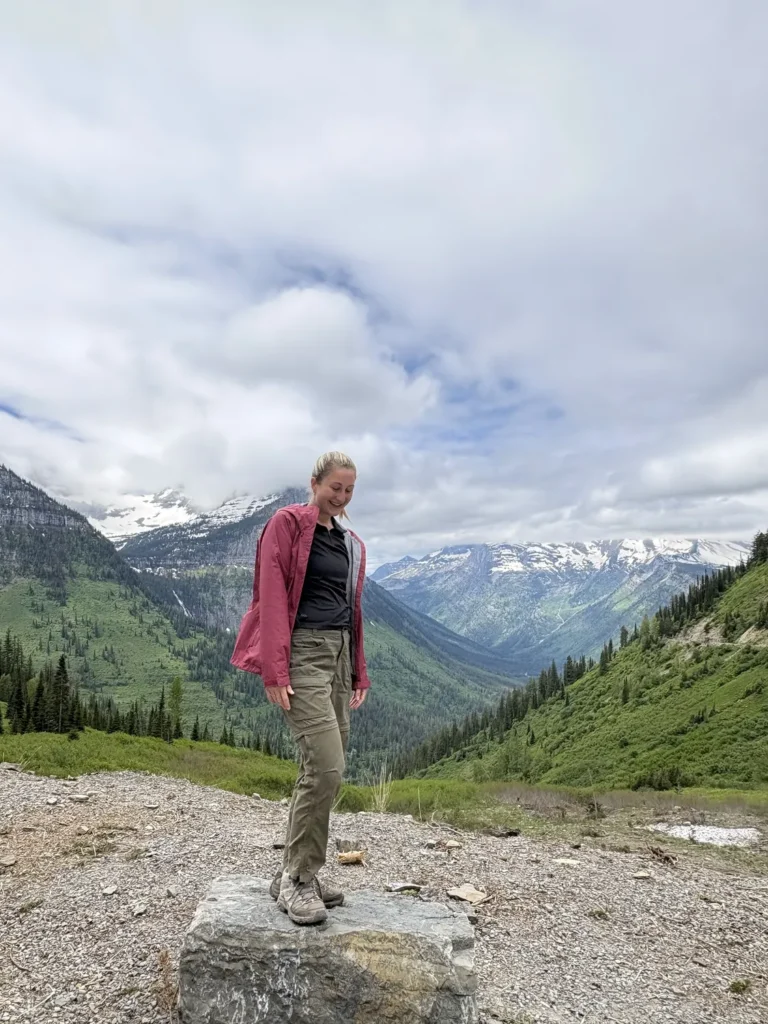
That also goes for the other areas that used to need one. The NPS says vehicle reservations aren’t required at Many Glacier, Two Medicine, or the North Fork in 2026 either. According to the NPS, rangers can still temporarily turn cars away from an entrance when an area gets too crowded. I lived there all summer and never saw this actually happen, but getting there early is still smart, especially in July and August.
Since the rules seem to change every year, check the official Glacier National Park page before your trip to see what’s in place for your dates.
You Still Need a Park Entrance Pass
You don’t need a pass to drive Going-to-the-Sun Road itself, but you do need a pass to get into the national park. I bought the America the Beautiful annual pass, which covers entrance fees at every national park for a year. If you’re visiting more than one park, it pays for itself fast. I bought mine right at the entrance gate (in Yellowstone). You just hand over the money, and they give you the card. According to the NPS, you can also buy one at over 1,000 federal recreation sites, online from the USGS store, or as a digital pass on Recreation.gov.
Here’s what it costs, according to the NPS:
- 7-day private vehicle pass: $35 in summer ($25 from November 1 to April 30)
- Glacier annual pass: $70, for Glacier only
- America the Beautiful annual pass: $80 for US citizens and residents
- International visitors: the non-resident annual pass is $250. Without it, non-residents 16 and older pay an extra $100 per person on top of the regular entrance fee
You can find all the current prices on the NPS Fees & Passes page.
The Logan Pass Three-Hour Parking Limit
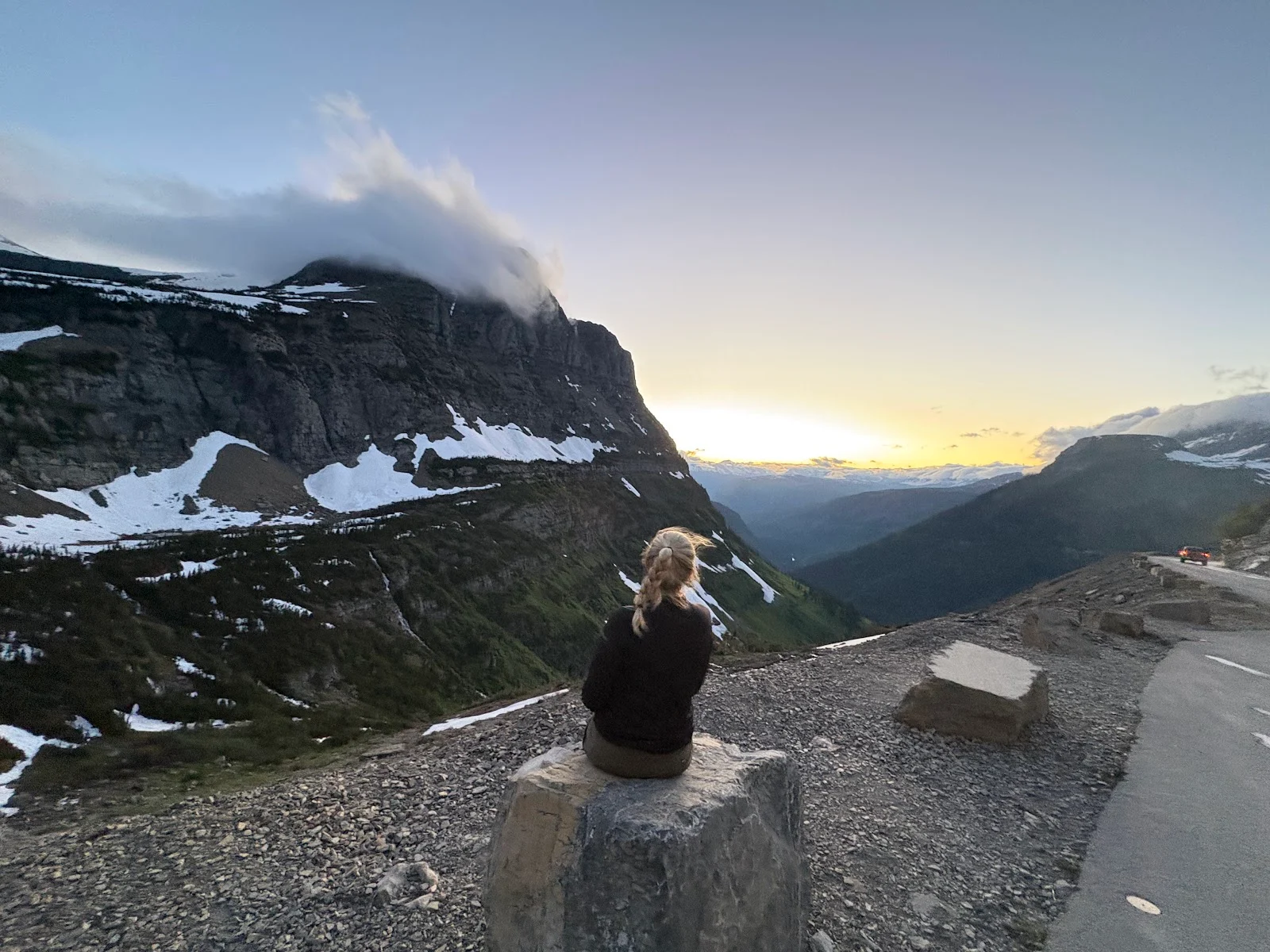
Logan Pass is the highest point on Going-to-the-Sun Road. It’s where you park for the Logan Pass Visitor Center and for the hikes that start there, like the Highline Trail and Hidden Lake Overlook.
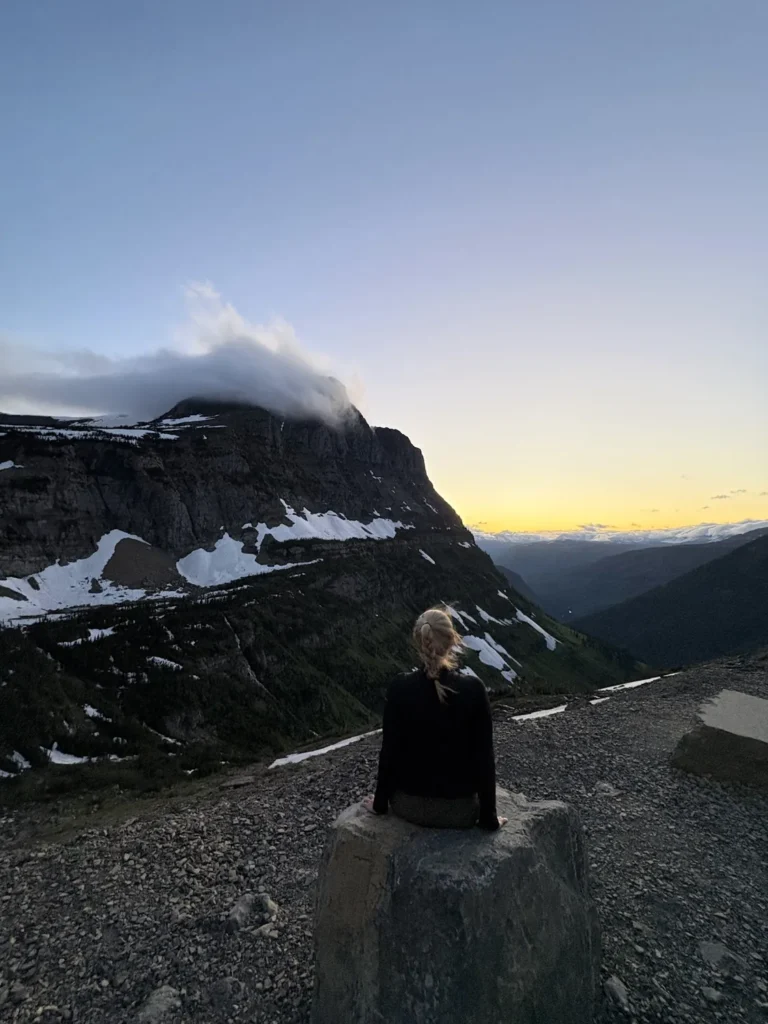
In 2026, the NPS added a three-hour parking limit at Logan Pass. Here’s how it works, according to the NPS:
- The limit runs from July 1 through Labor Day (September 7, 2026), and it’s enforced 24 hours a day.
- After you park, you grab a free, timestamped parking permit from the kiosk and put it on your dashboard.
- Overnight parking isn’t allowed unless you have a backcountry permit or you’re staying at Granite Park Chalet.
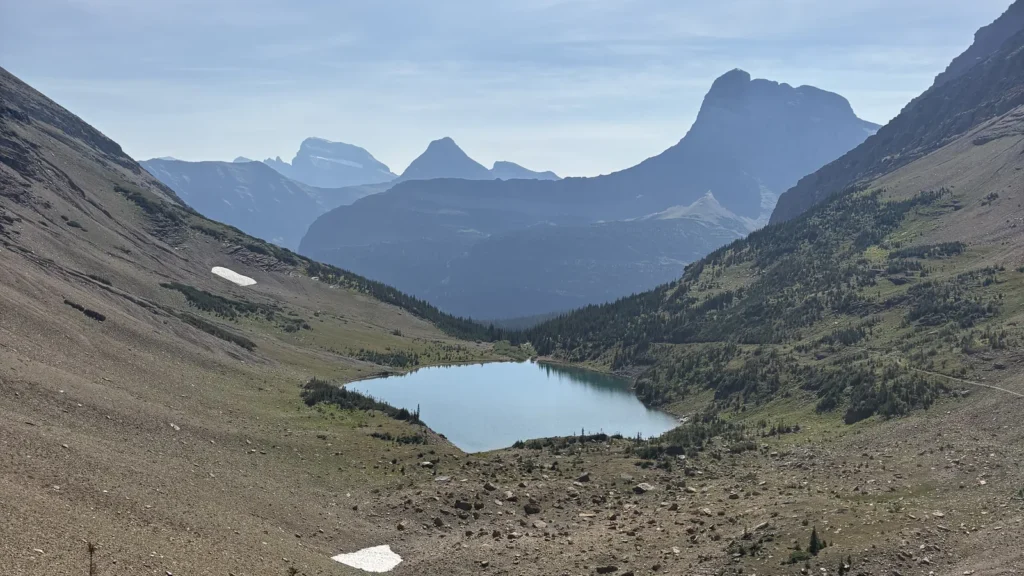
Three hours is plenty for the visitor center or Hidden Lake Overlook. The overlook is 1.3 miles each way with about 600 feet of elevation gain, according to the NPS. I hiked it a bunch of times this summer, and it takes about 2 hours at a pretty chill pace. It can take longer early in the season, when there’s still snow and ice on the trail. If you go then, wear good hiking boots and take your time, because it gets slippery.
I wouldn’t go all the way down to Hidden Lake itself (2.5 miles each way, according to the NPS) with a three-hour limit unless you want to rush. It’s doable, but you’ll have to be fast. When I hiked all the way to the lake, I parked at the pullout instead.
If you’re planning a longer hike like the Highline, or you just want to stay up there longer than three hours, you have three options: park at a pullout, take the shuttle, or hitchhike. If you hitchhike, use your best judgment and stay safe.
When does the Logan Pass lot fill up?
In peak season, the Logan Pass lot is usually full or mostly full by 7 a.m., and it stays pretty full until about 5 or 6 p.m. If you get there before 7 a.m. or after 6 p.m., you’re way more likely to find a spot.
If you show up when it’s full, it’s not a huge deal. You can circle the lot and catch someone walking back to their car. It does get pretty hectic in peak season, but it’s never taken me longer than 15 minutes to get a spot.
Where I Parked When I Needed More Than Three Hours
When I needed more than three hours at Logan Pass, I parked at a pullout about a quarter mile east of Logan Pass (toward St. Mary) instead. This is what I did in 2026. It’s a pretty big pullout that fits about 10 to 15 cars, there was no time limit there in 2026, and there’s usually at least one spot open (just know how to parallel park). The coordinates are 48.69725, -113.71096.
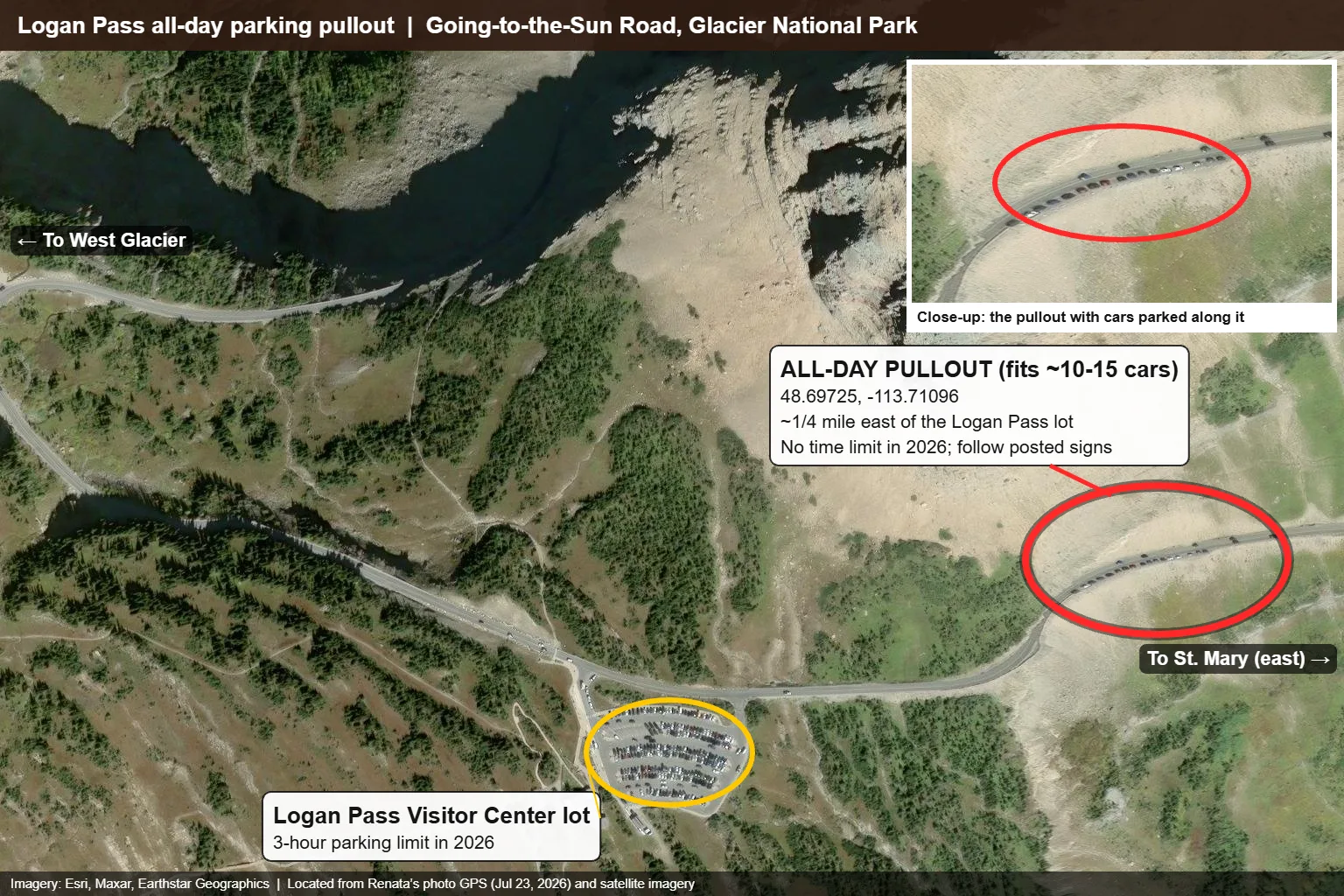
This is where I personally parked, and it saved me from waiting for a spot to open up at Logan Pass. They may put up signs in future years, so always check for parking signs before you leave your car.
How to Use the Logan Pass Shuttle
The other option is the Logan Pass shuttle. I used it a few times, and it’s really easy. A ticket is only $1 (it’s a Recreation.gov processing fee), and you can take it up to Logan Pass and then back down later in the day.
How to get a shuttle ticket
Tickets are only sold on Recreation.gov. You can’t buy them in the park, and according to the NPS, the shuttle won’t pick up anyone without a ticket. Every person, 2 and older, needs their own ticket.
According to the NPS, tickets are released two ways:
- 60 days ahead: some tickets go on sale 60 days before your date, at 8 a.m. Mountain Time.
- The night before: the rest are released every day at 7 p.m. Mountain Time for the next day’s shuttles.
I got mine the night before. You just have to be right on time at 7 p.m., because they sell out fast. Make sure you’re logged in to your Recreation.gov account and all set to go before then. You need to be quick, and you might not get the time slot you want, but there should be other ones available.
Where the shuttle picks you up
According to the NPS, the 2026 shuttle ran express to Logan Pass from four places:
- West side: Apgar Visitor Center and Lake McDonald Lodge, with a stop at The Loop
- East side: St. Mary Visitor Center and Rising Sun
Shuttles take you up in the morning and bring you back in the afternoon. They leave Logan Pass about every half hour to every hour, so there are plenty of buses heading back down. The last ones leave around 7:30 p.m. heading west and 8 p.m. heading east. Don’t miss the last one, because according to the NPS, there’s no other public transportation back from Logan Pass.
One more thing: in 2026, the shuttle didn’t stop at Avalanche Lake or Trail of the Cedars, so you’ll need to drive to those.
When Is Going-to-the-Sun Road Open?
In 2026, the full road opened on June 22, according to the NPS. It usually opens toward the end of June, but it depends on snow melt and the weather that spring. It usually stays open until the third Monday in October, but snow can close it sooner. Near the end of my season, it closed a few times when it started to snow, then reopened when the snow melted. Once the snow stopped melting and it got dangerous to drive, they closed it for the winter. In 2026, the park closed the alpine section for the winter in October, according to the Flathead Beacon. The lower parts of the road, like the stretch along Lake McDonald, stay open all year.
Walk or bike the road before it opens to cars
Before the road opens to cars, parts of it open to people walking and biking. I walked part of the road around June 18, and it was so fun. Lots of people were biking it, and everyone seemed to love it. The whole road usually opens to people walking and biking about a week before it opens to cars.
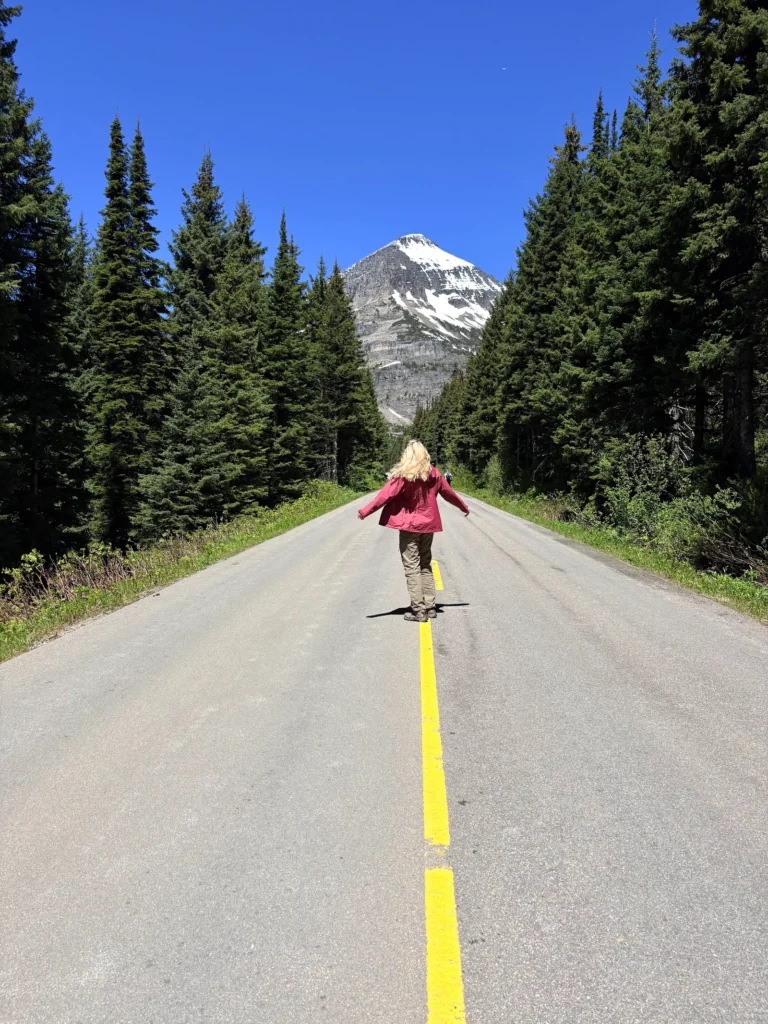
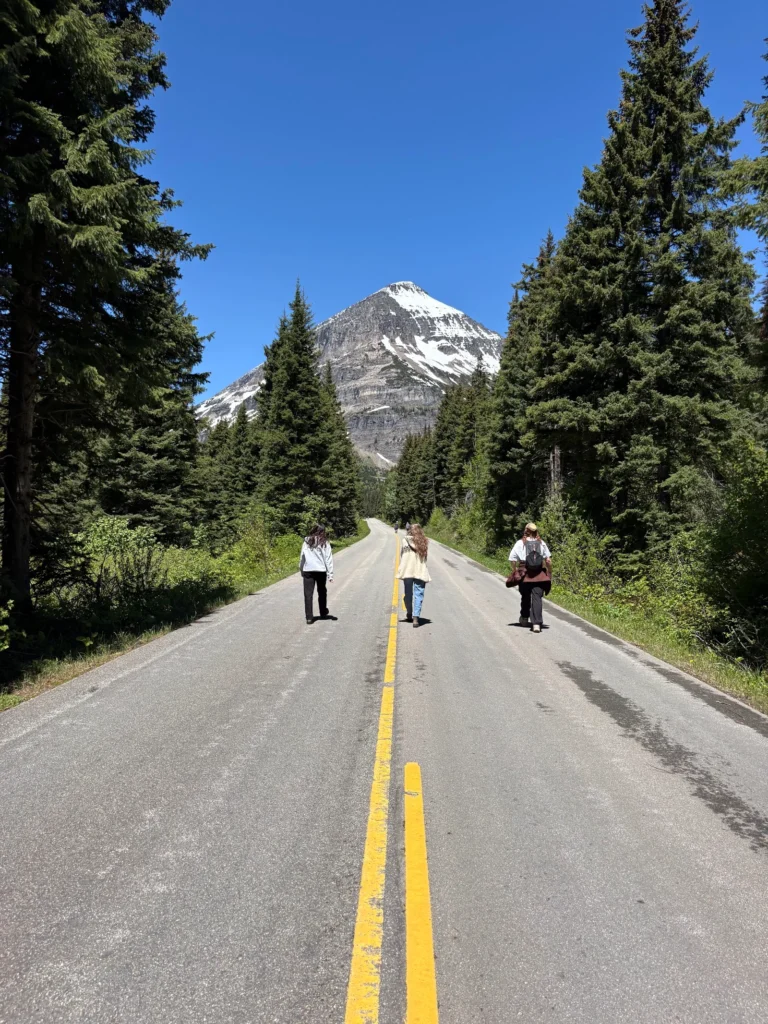
You can start at Lake McDonald Lodge or Avalanche Creek on the west side, and St. Mary or Rising Sun on the east side. How far you can go depends on where the plows are. Road crew closures are in place Monday through Thursday during plowing, and you can’t go past the hiker/biker closures. Bring warm layers, rain gear, and plenty of food and water. Check the NPS spring biking page for the latest closure points.
Where to rent a bike near Glacier
Don’t have a bike with you? These are the main places to rent one, and e-bikes have been allowed in the park since 2019, according to the Flathead Beacon:
- Glacier Outfitters (Apgar Village, inside the park): regular bikes, e-bikes, and kids’ bikes, plus a shuttle to the start of the ride. They recommend booking about two months ahead.
- Glacier Guides and Montana Raft (West Glacier, just outside the park): regular bikes and e-bikes, plus a bike shuttle that runs until the road opens to cars.
- Rising Wolf Outfitters (East Glacier Park): mountain bikes, e-bikes, and bike shuttles on the east side.
- Montana E-Bikes & More (Whitefish): lots of e-bike options if you’re staying in Whitefish.
Prices, shuttle times, and rental seasons change every year, so check each shop’s website before you book.
Which Entrance Should You Use?
I lived right by the St. Mary entrance on the east side, and there was never a line. I also went into Many Glacier a lot and never saw a line there either. The west side (West Glacier) is the more popular side of the park, so you’re more likely to wait there. If you’re staying on the east side, it’s usually a lot calmer. But honestly, I wouldn’t be too concerned about lines. I don’t think they’re as common in Glacier as they are in Yellowstone or other popular parks. You should go through all the entrances and explore the whole park, because every part of it is beautiful and different. Not sure which side to stay on? Here’s my guide to where to stay in Glacier.
Where to stay near each entrance
Here are places to stay near the west and east entrances. You can compare hotels, cabins, and vacation rentals on each map.
West Glacier and Lake McDonald
St. Mary (east side)
You’ll need a car to drive Going-to-the-Sun Road and get around the park. There’s no real public transportation around Glacier, and the shuttle only runs to Logan Pass in summer, so having your own car makes everything easier, especially for an early start. 🚗 Book your rental car here ✈️ Find flights to Glacier 🏨 Find hotels near Glacier
Going-to-the-Sun Road Vehicle Size Limits
If you’re driving an RV or towing a trailer, check this before you go. According to the NPS, vehicles longer than 21 feet (including bumpers) or wider than 8 feet (including mirrors) aren’t allowed between Avalanche Creek and Rising Sun. The NPS also warns that vehicles taller than 10 feet may have trouble with rock overhangs between Logan Pass and The Loop. If your vehicle is too big, the shuttle is a great way to still see the road.
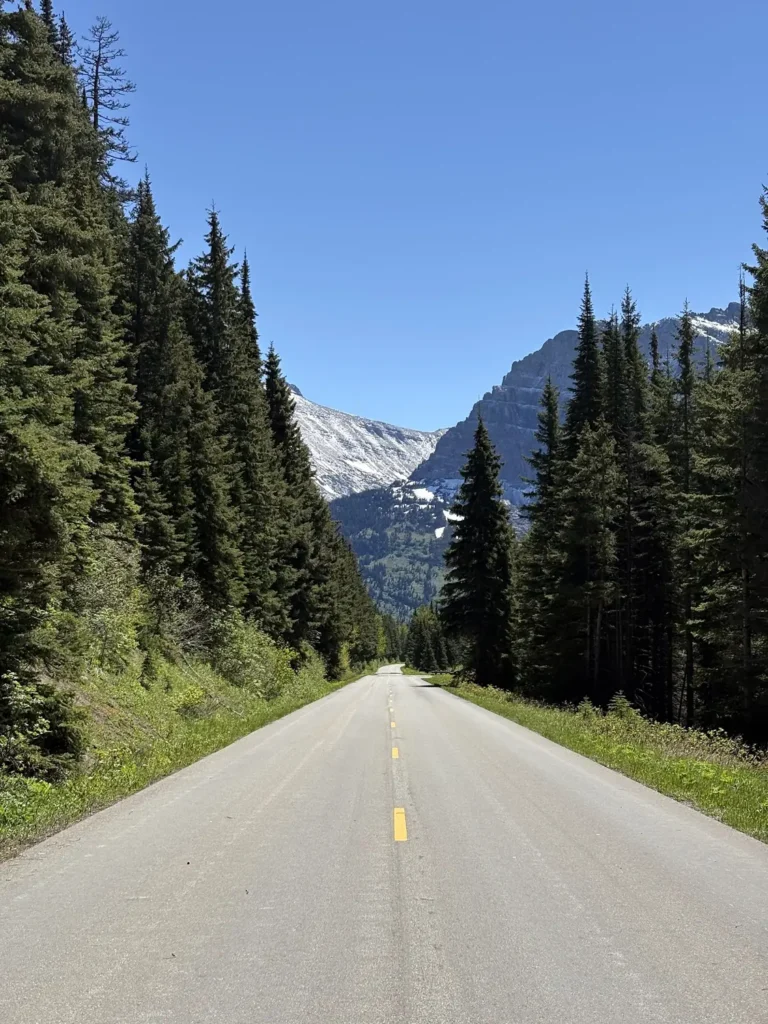
Nervous about driving it yourself? I wrote about whether Going-to-the-Sun Road is scary and what the drive is really like.
My Tips for Visiting Glacier Without a Reservation
- You still need an entrance pass. You don’t need to buy it ahead of time, but you do need one to get into the park.
- Plan around the three-hour limit. Hidden Lake Overlook and the visitor center fit easily. For the Highline or anything longer, use the shuttle or a pullout. You can also hike just the first couple of miles of the Highline Trail and turn around. Lots of people say the first few miles are the most beautiful part anyway.
- Be ready right at 7 p.m. Mountain Time for shuttle tickets. Log in to Recreation.gov a few minutes early. If you’re coming from another time zone, double-check the time.
- Get to Logan Pass before 7 a.m. or after 6 p.m. That’s when you’re most likely to find a spot in peak season.
- Try the east side. I never saw a line at the St. Mary or Many Glacier entrances. I honestly think it’s the prettier side anyway, and the hiking is unreal. It’s a hiker’s paradise.
- Check the NPS site before your trip. The rules have changed almost every year, so make sure you know what’s in place for your dates.
Glacier National Park Reservations FAQ
Do you need a reservation for Glacier National Park?
You didn’t need one in 2026. According to the NPS, vehicle reservations weren’t required for Going-to-the-Sun Road, Many Glacier, Two Medicine, or the North Fork. You still need a park entrance pass. Check the NPS vehicle reservations page to see the rules for 2027 and beyond.
Do you need a ticket to drive Going-to-the-Sun Road?
No. In 2026, you could drive Going-to-the-Sun Road without a vehicle reservation or time slot. The only limit is the three-hour parking limit at Logan Pass.
How long can you park at Logan Pass?
Three hours, from July 1 through Labor Day in 2026, according to the NPS. You grab a free, timestamped permit from the kiosk and put it on your dashboard.
How much is the Logan Pass shuttle?
It’s $1 per ticket, which is a Recreation.gov processing fee. Every person, 2 and older, needs a ticket.
When are Logan Pass shuttle tickets released?
According to the NPS, some tickets are released 60 days ahead at 8 a.m. Mountain Time, and the rest are released at 7 p.m. Mountain Time the night before. They go fast, so be logged in and ready.
How much does it cost to get into Glacier National Park?
According to the NPS, a 7-day private vehicle pass is $35 in summer. The America the Beautiful annual pass is $80 for US residents and covers every national park for a year.
Will Glacier bring back vehicle reservations?
Nobody knows yet. The NPS decides on Glacier National Park reservations each year, and the rules have changed a lot. Check the official Glacier National Park website for the current year’s rules before your trip.
What time does Logan Pass parking fill up?
In peak season, it’s usually full or mostly full by about 7 a.m. and stays that way until 5 or 6 p.m. Arrive before 7 a.m. or after 6 p.m. for the best chance at a spot.
Can you hike Hidden Lake Overlook in three hours?
Yes. Hidden Lake Overlook is 1.3 miles each way, according to the NPS, and it takes me about 2 hours at a chill pace. Going all the way down to Hidden Lake, which is 2.5 miles each way, is possible in three hours, but you’ll have to rush.
When does Going-to-the-Sun Road open?
It usually opens toward the end of June, but it depends on snow melt and the weather. In 2026, the full road opened on June 22, according to the NPS. It usually closes for the winter by the third Monday in October.
Can you bike Going-to-the-Sun Road before it opens to cars?
Yes. The whole road usually opens to hikers and bikers about a week before it opens to cars. Before that, parts of it open as the plows clear them. You can start at Lake McDonald Lodge or Avalanche Creek on the west side, and St. Mary or Rising Sun on the east side. How far you can go depends on the plowing.