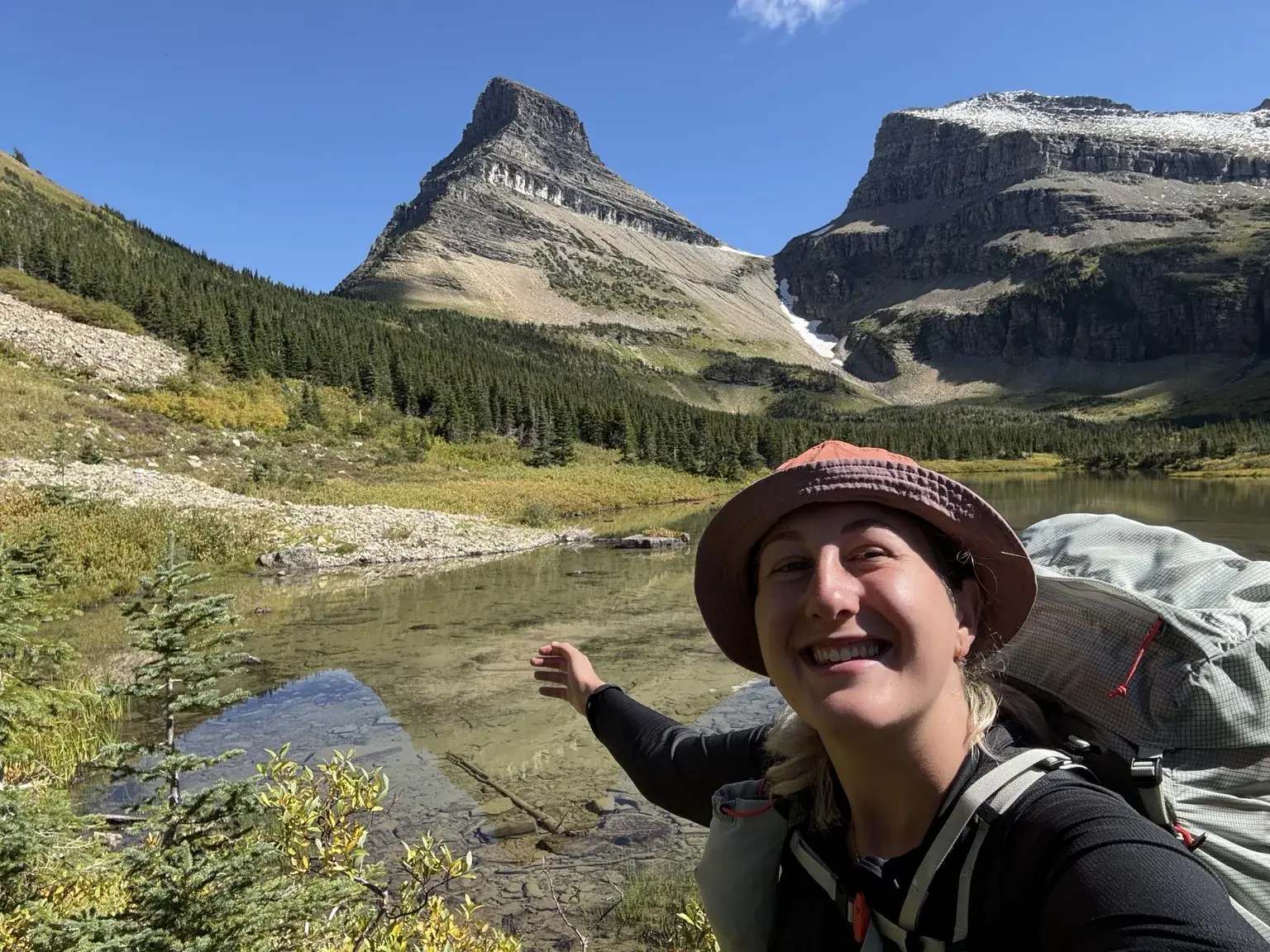
One of my friends texted me about a week before this trip and asked if I wanted to join him on a 3-day, 2-night backpacking trip through Glacier National Park.
My initial thought? Absolutely not.
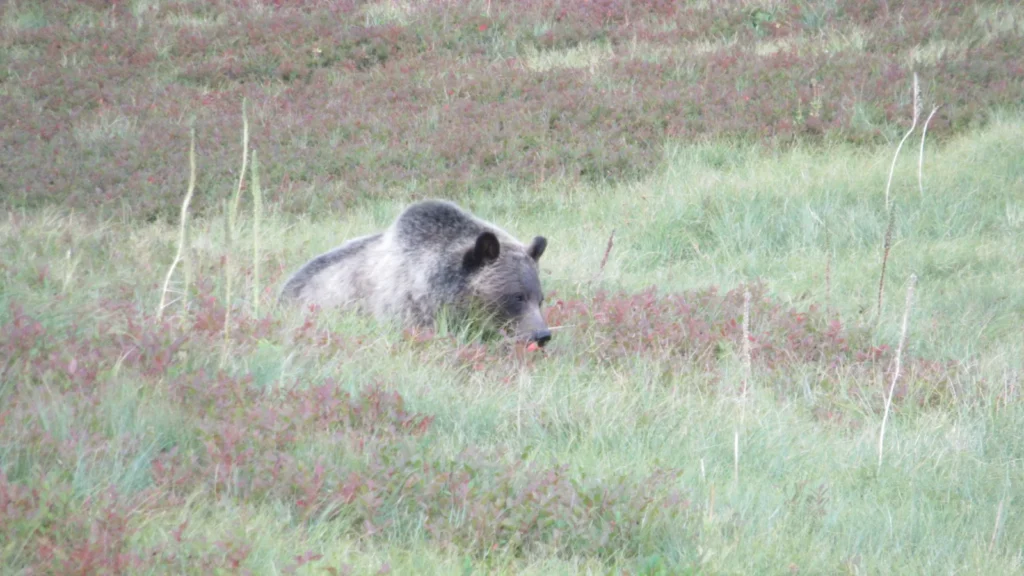
It was supposed to be cold and rainy, we’d be sleeping in the backcountry in an area with a healthy grizzly bear population, and I had never been on a real backpacking trip before.
But then I thought about it. It was completely outside of my comfort zone, which meant I pretty much had to say yes.
And I’m SO glad I did.
My first real backpacking trip ended up being AWESOME.
We backpacked from Belly River to Goat Haunt, covering around 30 miles over three days. The trail was mostly flat, and from my experience, I’d say it was a pretty beginner-friendly introduction to backpacking.
That doesn’t mean everything went smoothly, though.
There was rain. There was mud. My brand-new tent didn’t exactly perform the way I hoped it would. I learned that apparently even baby wipes need to be hung away from your tent in bear country.
My Backpacking Trip at a Glance
Route: Belly River to Goat Haunt
Length: Around 30 miles
Time: 3 days / 2 nights
Night 1: Glenns Lake Head Campground
Night 2: Kootenai Lake Campground
Difficulty: Beginner-friendly, in my experience
Permit: Wilderness permit required
Best for: Someone looking for a longer but relatively flat backpacking route in Glacier National Park
Preparing for My First Backpacking Trip
The day after agreeing to the trip, I went to REI and went SHOPPING!!
I spent way more money than I originally planned. Oops…
My thinking, though, is that I’d rather buy camping gear once and get something good quality that will actually do its job than buy the cheapest version and have to replace everything a few years later.
I like buying things that last, especially when I’m relying on them while sleeping outside in Glacier National Park.
For the most part, it was money well spent because I ended up needing basically all of it.
Before the trip, I picked up some new gear from REI, NEMO, Sea to Summit and Smartwool. Here’s my gear haul TikTok:
Our Belly River to Goat Haunt Backpacking Route
Our plan was to backpack approximately 30 miles from Belly River to Goat Haunt over three days and two nights.
Because we were staying overnight in Glacier’s backcountry, we also needed a wilderness permit.
I can’t give you a firsthand walkthrough of getting the permit because my friend works for the National Park Service and handled that part of the trip for us. If you’re planning this route yourself, I recommend checking Glacier National Park’s current wilderness permit information before your trip because the reservation and walk-up procedures can change.
Transportation also required a little planning.
We took two cars. We left one near the boat launch in Waterton, Canada, and took the other to the Belly River trailhead, where we would actually begin hiking.
On our way back into the United States (to start the hike), border control thought I had stolen my own car.
My friends and I were detained and threatened with arrest.
It was pretty crazy. Good lore, right? I believe in the burnt toast theory, so I just figured that maybe we weren’t meant to start the hike for another hour because maybe something would’ve happened.
Thankfully, it eventually became clear that there had been one giant misunderstanding and everything turned out fine.
As you can imagine…we started our backpacking trip with plenty to talk about.
Day 1: Rain, Mud & Learning How to Camp (Stayed at Glenns Lake Head Campground)
We started hiking from Belly River and almost immediately…
It started raining.
Honestly, it was fine. My friends and I were still laughing about how we’d just been threatened with arrest, so morale was surprisingly high.
The rain definitely limited some of the views, though, and our shoes quickly became covered in mud. I also didn’t put my rain jacket on or put the rain cover on my backpack until like 1 hour into it raining because I was too lazy and kinda regretted that…so learn from my mistake and don’t be lazy. Put your rain jacket and backpack rain cover on ASAP.
Eventually, we made it to our first campground and had a beautiful waterfront view.
The first thing we did was set up our sleeping situations so we could rest after dinner and not have to put up our tents in the rain and in the dark. Well…I had absolutely no idea how to set up my tent. I’d never set up a tent before, so I felt kinda dumb.
Thankfully, my friend helped me, and that first night basically became Backpacking 101 for me.
I learned how to properly set up my tent, organize my sleeping gear and, very importantly, how food and scented items are handled when you’re camping in bear country.
One thing I didn’t realize beforehand was just how many things count as scented items.
Baby wipes? Yep.
Soap? Yep.
Hand sanitizer? Also yep.
Food and scented items have to be properly stored away from your sleeping area so you aren’t keeping something potentially interesting to a bear inside your tent.
Nothing like sleeping in grizzly country to make you suddenly VERY aware of where you left your hand sanitizer…oops.
My $400 Tent vs. The Rain
That first night, I also realized that the expensive ultralight tent I’d just bought was not performing nearly as well in the rain as I expected.
The tent was around $400.
It weighed almost nothing (about 1 lb), which was amazing when I was carrying everything on my back.
But I realized in the morning that some of my stuff got wet (like my expensive sleeping bag).
For $400, I was expecting better rain performance, so this tent from REI will more than likely be returned in the next week.
Day 2: Sunshine, Drying Everything & INCREDIBLE Views (Stayed at Kootenai Lake Campground)
The next morning was COLD.
Luckily, I had thrown some hand and foot warmers into my bag that I’d bought at Walmart for about $1.
Possibly one of the cheapest things I brought, and somehow one of the things I was happiest to have.
Highly recommend.
They made eating breakfast and packing everything up much more comfortable while I waited for my body to accept the fact that we were getting up and hiking again.
Luckily, Day 2 brought SUNSHINE…it just took a hot minute for the sun to come out and heat me up.
My friends and I immediately took advantage of it and started drying everything that had gotten wet the previous day. We attached wet gear to the outside of our backpacks while we hiked and laid things out in the sun whenever we stopped for breaks.
And the views that day…
Crazy incredible.
Mountain views. Perfect mountain reflections in the lakes. Water crossings. Sunshine.
It was just an overall happy day.
And when we finally got to camp that evening…I was so happy because…
I set up everything by myself.
My tent. My sleeping setup. My gear.
The day before, I didn’t even know how to set up my own tent. Now I actually knew what I was doing.
There’s something really satisfying about being completely new at something and then realizing, wait…I’m actually learning how to do this.
Day 3: Goat Haunt, a Boat Ride & Hot Dogs
On Day 3, we finished our hike (we had about 3 miles left) and made it to Goat Haunt.
From there, we hopped on the boat across the international border into Waterton.
And after three days of carrying everything we needed on our backs, sleeping outside and hiking roughly 30 miles…
We finished the trip with hot dogs in Waterton. It’s called Wieners of Waterton if you want to try it yourself. Highly recommend!
What I Ate on My 3-Day Backpacking Trip
I kept my food pretty simple.
In the mornings, I would usually snack on one or two protein bars. For lunch, I had a peanut butter and jelly sandwich. I actually made three PB&Js before leaving so I could have one for lunch each day.
I also brought Cheez-Its, trail mix and Rice Krispies Treats to snack on throughout the day.
For dinner, I ate freeze-dried backpacking meals, like pad Thai or chicken curry.
Nothing fancy, but after hiking all day, it tasted pretty good.
One thing I’m changing for my next backpacking trip is bringing a small camping stove and fuel. I didn’t have one of my own for this trip (thankfully, both of the friends I was with brought one, so I used theirs), and now that I know I actually enjoy backpacking, that’s going on my gear list.
How I check trail conditions: Before every hike or backpacking trip, I look the trail up on AllTrails and read the most recent reviews. People comment about whether there’s snow or ice, how the trail is holding up and what they recommend, so I know what to expect before I go.
Everything I Packed for Backpacking in Glacier National Park
I actually made an entire TikTok showing everything I packed for this trip. Watch it below, or watch my backpacking packing TikTok on TikTok.
If you don’t want to watch it, no worries. Here’s exactly what I brought:
Toiletries & Personal Items
Tissues: I used these for blowing my nose, but they’re also VERY useful for the pit toilets because there isn’t always toilet paper.
Baby wipes: These were basically my backcountry shower. I used them to clean my body after sweating all day, wash my face and, again…pit toilets.
Face sunscreen: Self-explanatory. You’re outside all day.
Lotion, hand sanitizer and bug spray: Also pretty self-explanatory. Just remember that scented items need to be properly stored in bear country.
Bear & Food Storage

Two dry bags: I used one for my food and another for scented toiletries so everything could be properly stored away from my tent.
Bear spray: Just in case. This stayed accessible rather than buried somewhere inside my backpack.
Clothing
Hat: Self-explanatory.
Rain jacket: Mine is from Patagonia, and considering it started raining basically as soon as we began hiking, I was VERY happy to have it.
Puffer jacket: Mine is from Cotopaxi. Again, very happy I brought this because those mornings were cold.
6 pairs of underwear
4 pairs of socks
4 tops
3 bottoms
I kept one top and one bottom specifically for pajamas so I had something separate to sleep in at night.
My Sleeping Setup
15°F NEMO sleeping bag: I knew it was going to be cold, so I specifically bought a sleeping bag that I knew would keep me comfortable during the colder nights. This was money well spent.
NEMO sleeping pad: This went underneath my sleeping bag and helped insulate me from the cold ground. Something I didn’t fully appreciate before backpacking was how important insulation underneath you is too.
Sea to Summit inflatable pillow: Small, lightweight and probably better than trying to use a pile of clothes as a pillow. But if you’re on a budget, you can definitely use a pile of clothes instead.
Tent & Rain Gear
Backpacking tent: Mine was from Mountain Warehouse and, as you already know, this one will probably be getting returned.
Rain cover for my backpack: I bought this just in case it rained. It rained, so I’m glad I had it.
Other Things I’m Glad I Brought
Hand and foot warmers: I found these at Walmart for around $1. You can put the hand warmers in your jacket pockets and the foot warmers in your socks when your hands and feet start getting cold.
These were such a small thing to pack and made SUCH a difference on cold mornings.
Portable charger: With no reception, I wasn’t exactly scrolling TikTok all day, but I still wanted my phone charged for pictures and emergencies.
Headlamp: Definitely necessary once the sun goes down.
LifeStraw collapsible squeeze bottle: One of my favorite things I brought. I only brought one water bottle and this squeeze bottle, and every lake I saw, I would just refill my water bottle with water from the lake.
Sandals: I brought these specifically for water crossings so I didn’t have to soak the shoes I was hiking in. Lowkey didn’t use them because I was too lazy to take my shoes on and off, and there were a lot of water crossings, so my feet were kinda just wet the whole backpacking trip.
One of My Favorite Parts
My phone couldn’t entertain me, so there wasn’t really a choice but to be present with the people I was with and pay attention to everything around me.
It was SO peaceful. Sometimes it’s just so nice to get away from your phone and society.
I think that’s one of my favorite things about backpacking now.
You’re carrying what you need on your back, you’re walking through some ridiculously beautiful place, and there’s really nowhere else you’re supposed to be.
What I Learned From My First Backpacking Trip
A week earlier, I didn’t know how to set up a backpacking tent.
I didn’t know everything that needed to be stored away from my sleeping area in bear country.
I didn’t know how my gear would perform through multiple days of rain and cold.
And I definitely didn’t know whether I’d even like backpacking.
Three days later, I had backpacked roughly 30 miles through Glacier National Park, learned a whole bunch of new skills, slept outside in grizzly country and discovered something I absolutely want to do again.
Was I cold? Yes.
Was I wet? Also yes.
Did my $400 tent disappoint me? Unfortunately, yes.
Was it worth it?
100%.
Sometimes the things that make me the most nervous are exactly the things I’m happiest I said yes to.
After the trip, I made a TikTok with my honest review of the $1,000+ of REI gear I bought, including the tent, sleeping pads, rain cover and LifeStraw, and which items were actually worth the price:
Backpacking Glacier FAQ
Do you need a permit to backpack in Glacier National Park?
Yes. You need a wilderness permit for any overnight trip in Glacier’s backcountry. Reservation and walk-up rules change, so check the NPS wilderness camping page before you plan.
Is Belly River to Goat Haunt good for beginners?
In my experience, yes. It was about 30 miles over three days and mostly flat, which made it a great first backpacking trip.
What should I pack for backpacking in Glacier?
Rain gear (even if the forecast looks good), warm layers, bear spray, a way to hang or store food, and a reliable tent. Here’s my full hiking and backpacking gear list.